
Last updated November 23, 2026
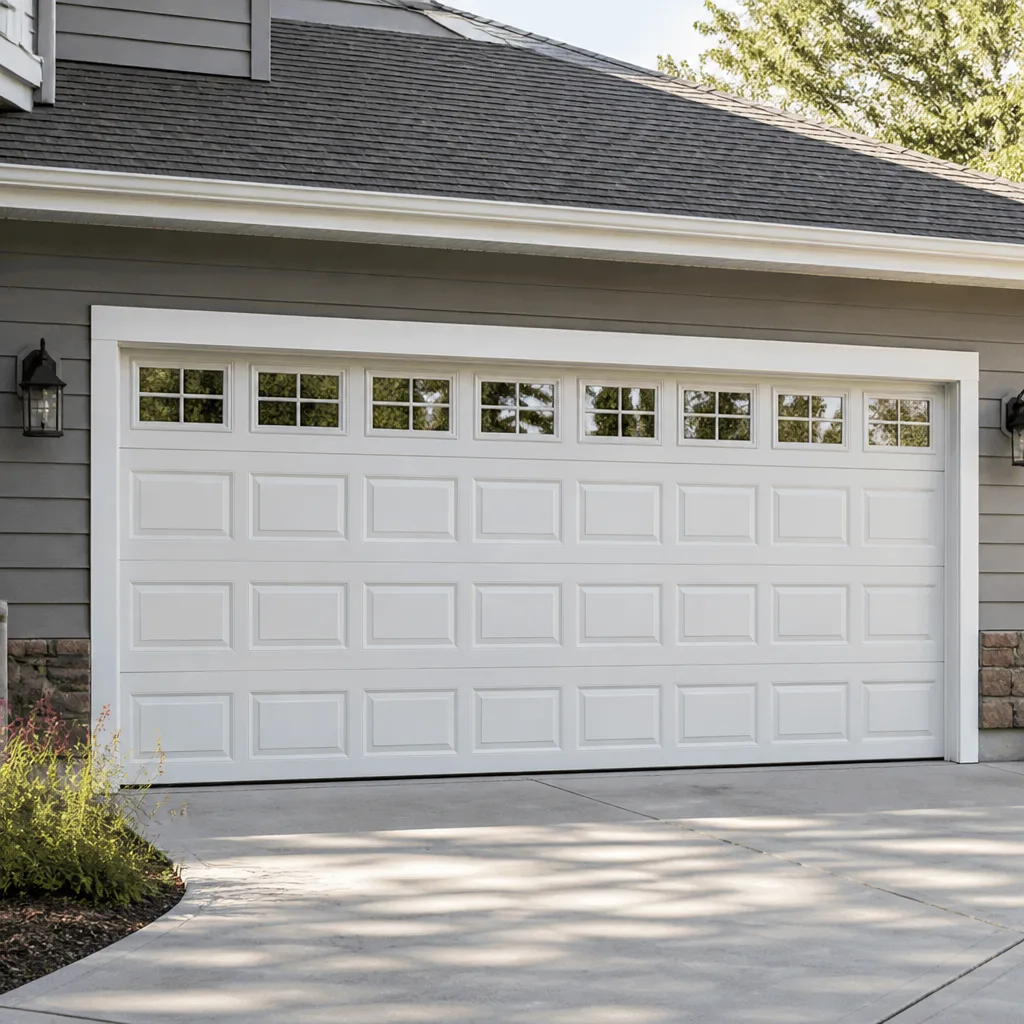 Raised-panel steel
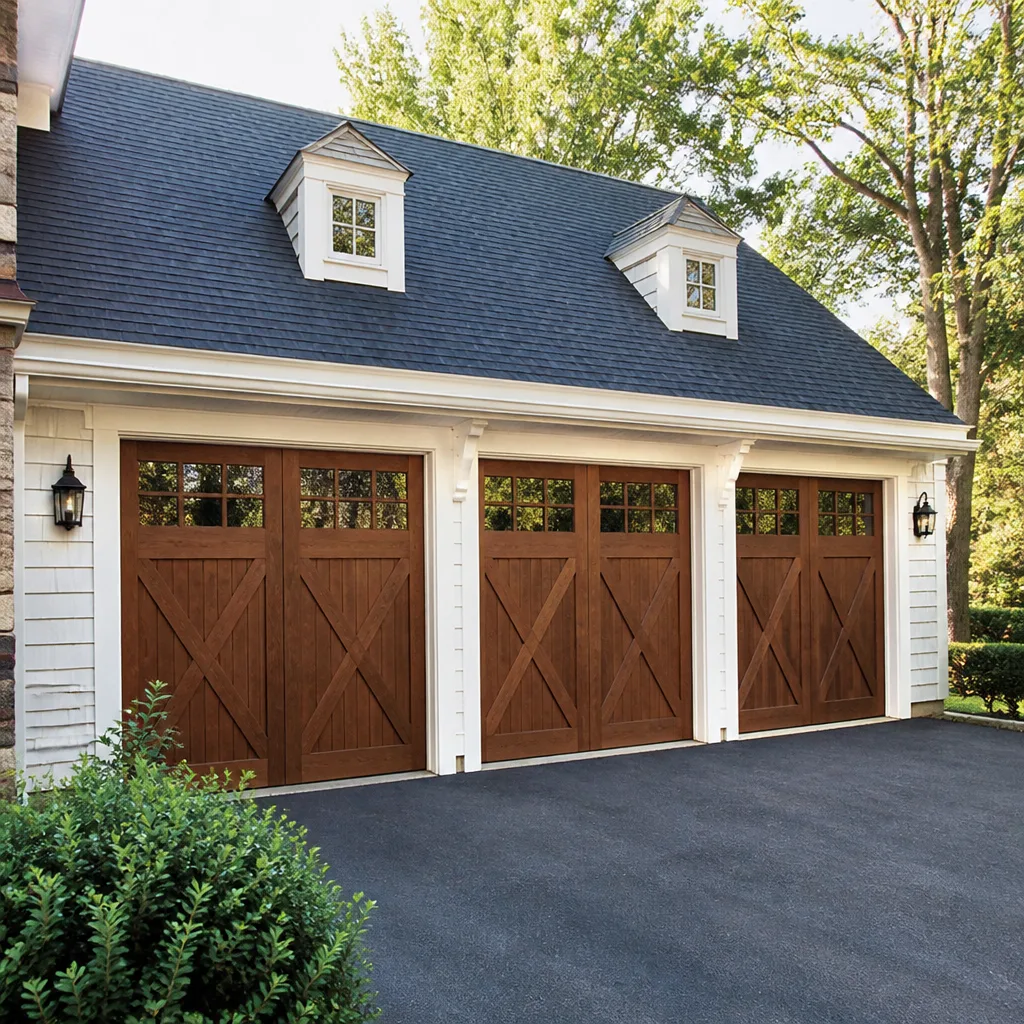 Carriage house
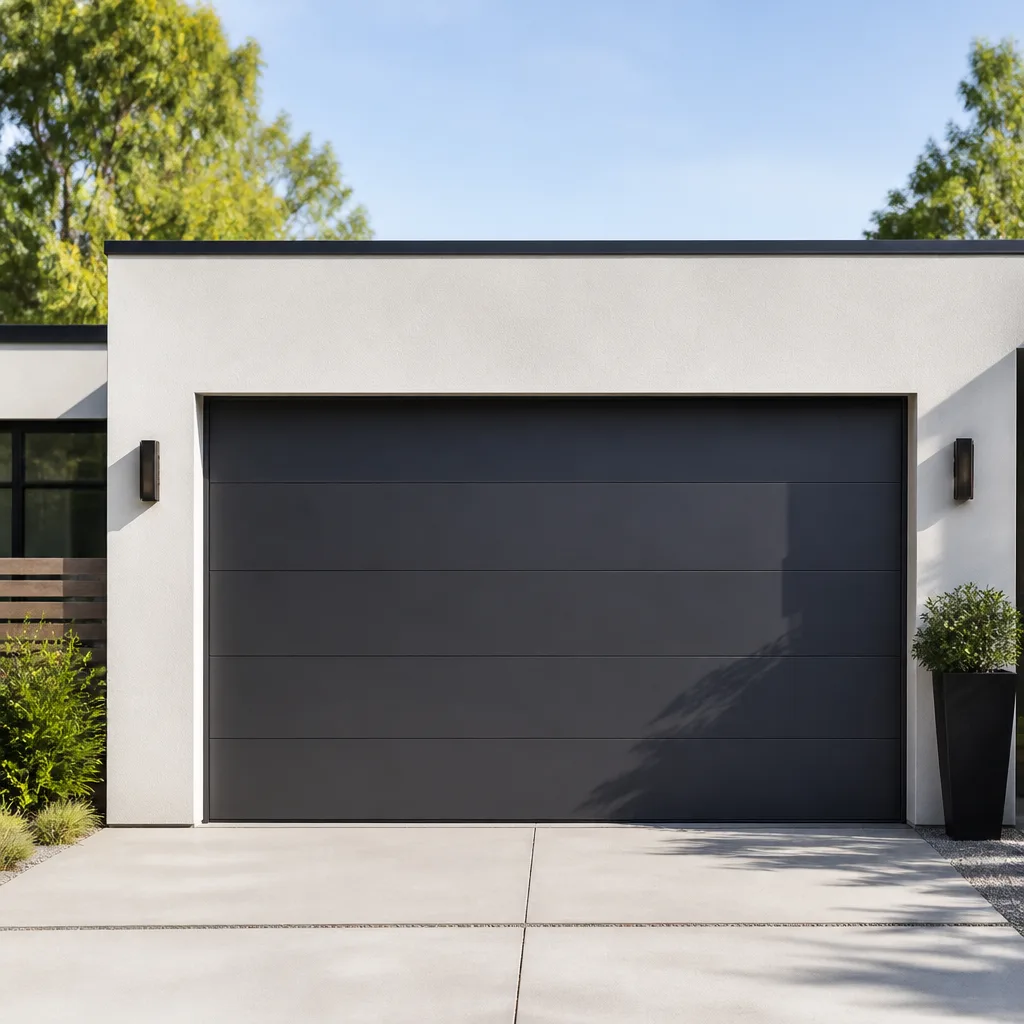 Modern flush
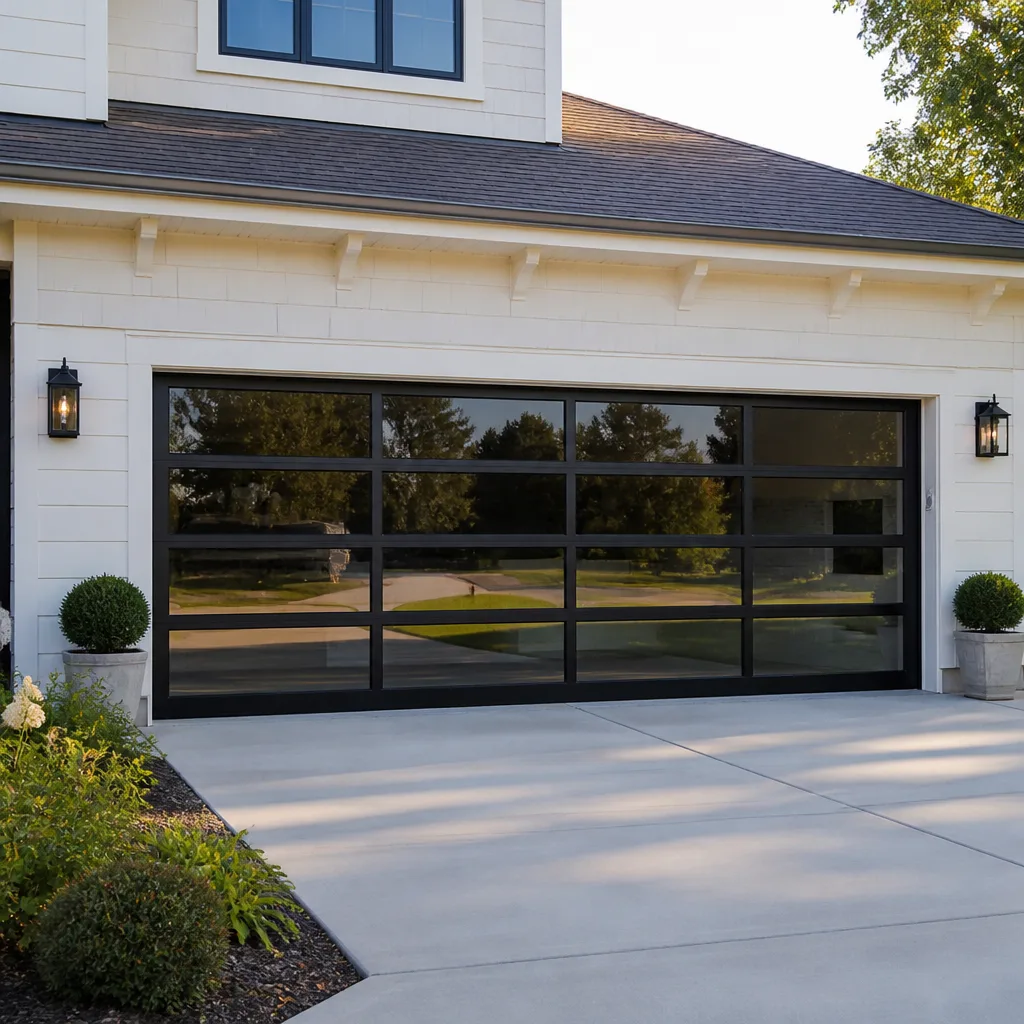 Full-view glass
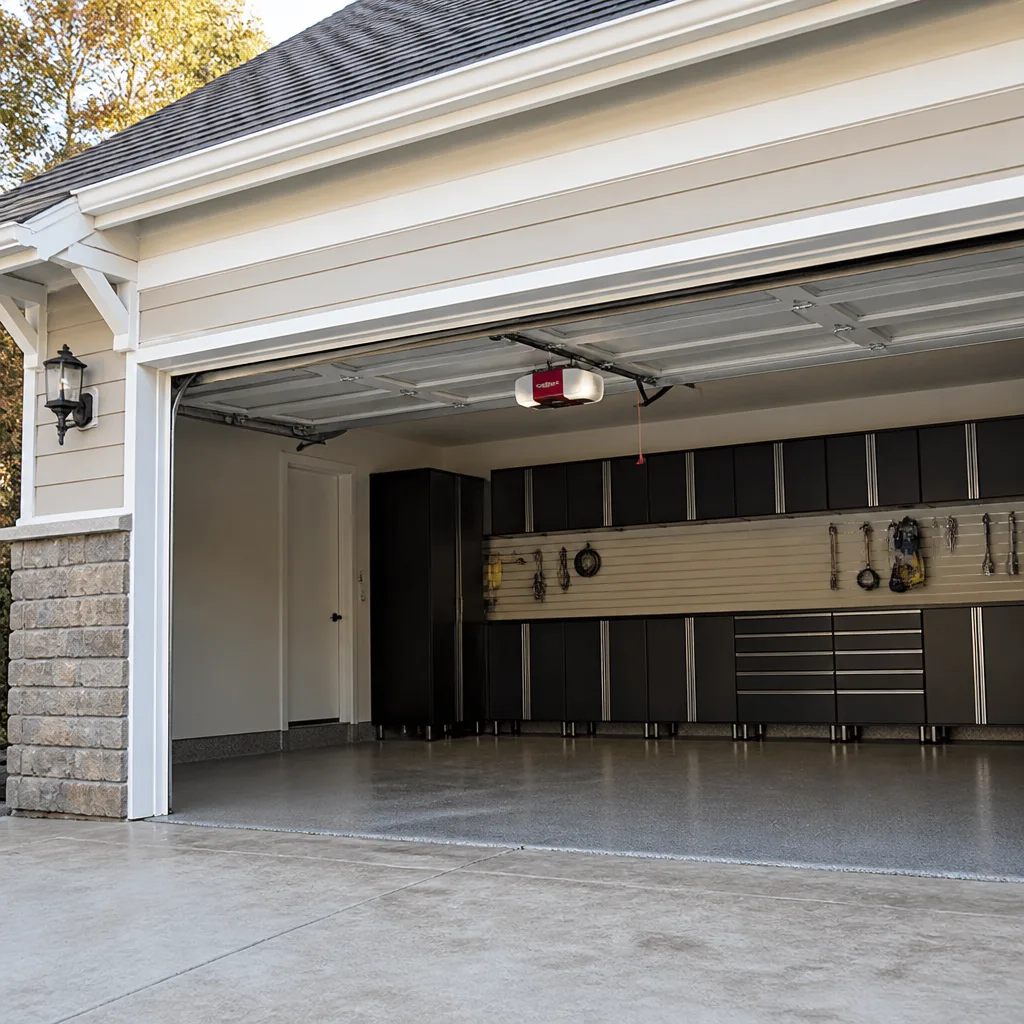 LiftMaster openers
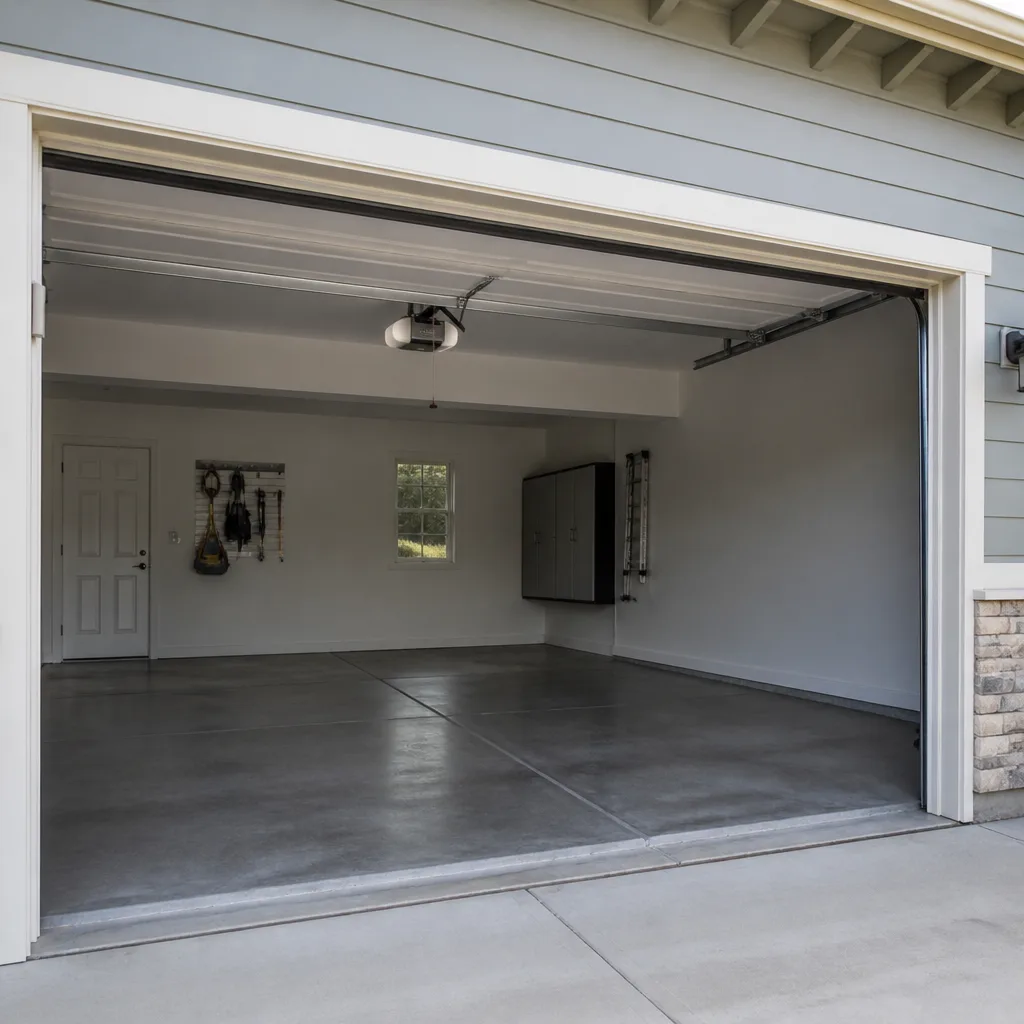 Chamberlain openers
Full 25-point door and opener safety check with every visit - springs, cables, rollers, tracks, and your LiftMaster or Chamberlain opener included
You get a price before we start. It does not change when the pro arrives.
Get your free estimateGarage Door Emergency Preparedness Guide for Reston Homes
Most homeowners treat a garage door failure like a surprise. It isn’t. Springs fatigue on a predictable curve, cables fray where they bend over the drum, and openers give warning signs for weeks before they quit. The homeowners who come through a breakdown without overpaying or getting hurt are the ones who thought about it beforehand. This guide walks you through the three phases of a garage door emergency – the moment of failure, the hours before help arrives, and the repair decision itself – so you know exactly what to do when it happens in Reston. No panic, no guesswork, no expensive choice in the first five minutes.
Quick Answer
If your garage door fails in Reston, do not force it and do not try to fix springs or cables yourself. Close the door if you can move it safely by hand, or block the opening if you can’t, keep everyone clear, and call (877) 703-6109. We answer 24/7, with fast dispatch from 7am to 7pm, and the price is quoted and agreed before any work starts.
Styles & brands we work with
- Raised-panel steel
- Carriage house
- Modern flush
- Full-view glass
- LiftMaster openers
- Chamberlain openers
Table of Contents
- The Three Phases of a Garage Door Emergency
- What to Do in the First 10 Minutes, by Failure Type
- The Emergency Release Cord: When to Pull It and When Not To
- What to Document Before the Technician Arrives
- What Legitimate Emergency Response Looks Like in Reston
- The Pre-Failure Checklist Every Reston Home Should Have
- How Reston Weather and Housing Shape Garage Door Wear
- Repair or Replace? Deciding Under Pressure
The Three Phases of a Garage Door Emergency
Every garage door emergency plays out in three stages, and each one has its own decisions. Treat them separately and the whole event stays manageable. Blur them together and small errors compound into real damage or a real injury.
Phase one: the moment of failure. Something snaps, the door drops or jams, or the opener runs but nothing moves. This phase lasts seconds and is where most costly mistakes happen. The instinct to “just lift it” or “just hit the button again” is strong, and it’s usually wrong. Your only jobs here are to stop, secure the opening if you can do it safely, and keep people and vehicles clear.
Phase two: the hours before a technician arrives. The door is stuck. Maybe your car is trapped inside, or the door is standing open and the house is exposed. This phase is about safety and security, not repair. You’re protecting the opening and gathering information.
Phase three: the repair decision. A technician diagnoses the problem and gives you a written estimate. This is where you decide repair versus replacement, and where a prepared homeowner avoids the pressure to approve work they don’t understand.
In our work around Reston, the failures that turn expensive almost always trace back to something done in phase one – a door forced by hand, an opener cycled repeatedly against a jammed track, a spring system pushed after a cable let go. Prepare for each phase and you remove most of that risk.
What to Do in the First 10 Minutes, by Failure Type
The right first move depends entirely on what failed. A snapping spring is not the same emergency as a door off its track, and treating them the same causes damage. Here’s how we’d advise a homeowner to respond to each.
If a torsion spring snaps
You’ll usually hear a loud bang and the door will suddenly feel impossibly heavy. Do not try to lift it. A broken spring leaves the door with no counterbalance, and the full weight is now yours to lift. Keep everyone away, leave the door where it sits, and call for service. This is the one failure where doing nothing is the correct first step. Spring work is the most dangerous repair on a garage door, which is why we handle it with proper winding tools rather than workarounds.
If a cable breaks
The door will likely hang crooked, with one side sagging. A broken cable can whip, so stay clear of the sides of the door. Don’t run the opener – it will pull against a door that’s only supported on one side and can bend panels or damage the track. Leave it, secure any gap if you safely can, and call.
If the door is off its track
Stop the opener immediately. A door that has jumped the track can fall or swing unpredictably, and forcing it back risks injury and bent panels. Don’t push, pull or lever it. Keep clear of the door’s path and call for a technician.
If the opener fails but the door is intact
This is often the least dangerous failure. If the door is balanced and the track is clean, you may be able to disengage the opener and lift the door by hand – but only if it moves smoothly and stays up on its own. If it feels heavy, binds, or won’t stay up, stop and call.
- Spring snap: don’t lift, don’t run the opener, call.
- Cable break: stay clear of the sides, don’t cycle the opener, call.
- Off-track door: stop everything, keep clear of the path, call.
- Opener-only failure: test by hand only if the door is balanced and moves freely.
The Emergency Release Cord: When to Pull It and When Not To
The red release cord disconnects the door from the opener so it can be moved by hand. It’s a genuine safety feature – and it’s also the most misused part of a garage door system. Pulling it at the wrong moment can send a door crashing down or leave it stuck in a position you can’t recover from.
When it’s safe to use: the door is fully closed, the springs are intact, the door is balanced, and there’s nothing jammed in the track. In that situation, pulling the cord lets you raise the door by hand so you can get a car out or secure the house.
When not to use it:
- The spring is broken or the door feels extremely heavy. Without counterbalance, a door can drop fast once you disengage it.
- The door is off its track or hanging crooked.
- A cable is broken.
- The door is partway open and you’re unsure of its balance.
- Anyone is standing under or near the door.
The test is simple: with the door closed and the opener disengaged, a properly balanced door lifts with one hand and stays put when you let go. If it won’t lift easily or slams down, the springs or cables have a problem and the door should not be operated by hand. Reconnecting the opener afterward matters too – most systems need the door brought to the fully closed position and the carriage re-engaged before the opener will run normally again. If reconnecting feels wrong, that’s a sign to call.
What to Document Before the Technician Arrives
Good information shortens the diagnostic step and keeps the estimate honest. Before help arrives, gather a few details. None of this takes long, and it turns a vague “my door broke” into a precise report a technician can act on.
- Photograph the whole door and the failure point. Get a wide shot of the door and closer shots of the springs, cables, drums, hinges and track. A photo of the broken part tells us a lot before we’ve even arrived.
- Note the sound. A sharp bang points to a spring. A grinding or scraping noise points to a track, roller or bearing issue. A click with no movement often points to the opener’s logic board or a safety sensor.
- Write down the sequence. What were you doing when it failed? Did the door stop partway, reverse immediately, or drop? Did anything happen just before – a power cut, a bump, a strange noise the day before?
- Find the opener model and the door brand. The opener’s model is usually on a label on the motor housing or the rail. The door brand is often on a sticker on the inside of a panel. Knowing whether you have a Craftsman or a Clopay door, or a Genie versus a LiftMaster opener, tells us which parts and quirks to expect.
- Note the spring type. Torsion springs run across the top above the door; extension springs run along the sides. Note which you have, and if you can see a cycle rating printed on the spring, record it.
This is exactly the sort of information that lets a technician arrive prepared rather than guessing. It also protects you: a documented failure is harder to pad with unnecessary parts. We work on the specific system in front of us, and clear details help us do that in one visit.
What Legitimate Emergency Response Looks Like in Reston
Garage door emergencies attract a certain kind of operator in Northern Virginia: dispatch brokers who advertise heavily, answer from a call center far from Reston, and route your job to whoever’s available – often at a marked-up price quoted over the phone before anyone has seen the door. Knowing what real response looks like helps you avoid that.
Here’s the contrast we’d point a homeowner toward:
- A real local response asks questions. What failed, what brand, what’s the door doing. A broker just wants an address and a card number.
- A real response quotes in writing after seeing the problem. The price for the job is set by a written estimate, agreed before any work starts. A phone quote for work nobody has inspected is a guess at best.
- A real response knows the equipment. Whether it’s a ten-year-old Craftsman opener or a newer LiftMaster with Wi-Fi, a technician familiar with the brand knows the failure patterns and the parts. A generalist dispatched from elsewhere is learning on your door.
- A real response has one number for the whole job. Diagnosis, the right parts and the installation happen without handing you to a second company or booking a callback.
We answer 24/7, and fast dispatch runs from 7am to 7pm, Sunday through Friday. A call outside dispatch hours is booked into the next opening. When your garage door won’t open, every minute matters, so we treat the call itself as the start of the job, not a sales pitch. We cover garage door repair for every failure we’ve described here, and we’ll tell you honestly when a problem can wait for a scheduled visit instead of an emergency one.
The Pre-Failure Checklist Every Reston Home Should Have
The best time to prepare for a garage door emergency is before it happens. Put this information together once and store it somewhere you’ll find it – a note on your phone, a folder with the home documents, a card taped inside a kitchen cabinet. When something fails, you won’t be scrambling.
Information to record now
- Door brand and model. Clopay, Amarr, Wayne Dalton and others each have their own panel and hardware details. Note yours.
- Opener brand and model. LiftMaster, Chamberlain, Genie, Craftsman and Raynor are among the most common. The model label is on the motor unit.
- Spring type and cycle rating. Torsion or extension, and the cycle rating printed on the spring if visible. Higher-cycle springs last longer, so knowing yours tells you roughly how much life is left.
- Manual override location. Find the red release cord now, and confirm how your particular opener re-engages.
- Safety sensor locations. Note the two sensors near the floor on each side of the door, and check now that nothing blocks them.
Hardware to have on hand
- A working flashlight kept near the garage entry.
- A sturdy pair of gloves, in case you need to move something by hand.
- A way to secure an open doorway – a temporary brace or lock – in case the door can’t be closed.
- The number for service saved in your phone: (877) 703-6109.
If you can’t find the spring cycle rating or the opener model, that’s fine – a technician can identify both on arrival. But the more of this you have ready, the faster the diagnosis goes. Our technicians have up to 11 years of experience reading exactly these details, and it’s often the difference between a one-visit fix and a callback.
How Reston Weather and Housing Shape Garage Door Wear
Reston’s climate puts steady wear on garage doors and openers. Summers bring heat and humidity that work on wood and steel alike, and winter brings freeze-thaw cycles that affect metal, lubricant and seals. A door that’s exposed to these swings year after year shows it in the springs, rollers and hinges first.
What that means practically:
- Humidity and temperature swings stiffen lubricant and speed wear on moving parts. A door that starts to squeal or drag in a seasonal change is telling you something needs attention before it fails.
- Freeze-thaw can affect the bottom seal and the concrete the door closes against, letting drafts and moisture in and putting extra strain on the opener as it works against a stiff seal.
- Housing type matters. Reston’s mix of townhomes and single-family homes means many garages are attached and used as a main entry point, so the door cycles far more often than a detached garage’s would. More cycles means springs reach their rated life sooner.
Reston’s neighborhoods – from the townhome clusters around Lake Anne and Tall Oaks to the single-family streets off Reston Parkway and around South Lakes – all share this pattern of high-cycle, attached garages. The door is the front door for a lot of households here. That’s why we treat a failure as urgent: a stuck door can trap a car, leave the house open, and block a family’s whole day. If you’re noticing the early signs – a door that’s slower, noisier or less balanced than it used to be – that’s the moment to schedule a look, not wait for the snap.
Repair or Replace? Deciding Under Pressure
When a technician gives you an estimate mid-emergency, the pressure to decide fast is real. A little framework helps you make the call on facts rather than stress.
Lean toward repair when: the door itself is sound – panels straight, no rust-through, track in good shape – and the failure is a component like a spring, cable, roller or opener. These are routine repairs and usually the sensible choice. A single failed part on an otherwise healthy door rarely justifies a new door.
Consider replacement when: the door has multiple bent or damaged panels, the track is badly deformed, or the door is simply old enough that you’re facing one component failure after another. If you’re already planning to replace the opener because it’s outdated, pairing that with a door that’s near the end of its life can make sense.
Whatever the recommendation, the price should be quoted and agreed before any work starts. Ask what’s being replaced and why, and get it in writing. For a full breakdown of costs, see our guide to garage door spring repair, and for opener-specific issues, our garage door opener repair page covers the diagnostics in more detail. We handle repair and full installation under one roof, so you won’t need a second company to finish what the first one started.
Common Mistakes to Avoid
- Forcing a heavy door by hand. Once a spring is broken, the door has no counterbalance. Lifting it manually risks a serious injury and can bend panels – and a bent panel turns a spring repair into a much bigger job.
- Cycling the opener against a jam. Repeatedly hitting the button when the door won’t move burns out the opener’s motor or strips its gears. If it’s stuck, stop pressing the button.
- Pulling the release cord without checking balance. Disengaging the opener on an unbalanced door can send it crashing down. Test the door’s weight before you pull.
- Accepting a price quoted over the phone before anyone has seen the door. In Northern Virginia, that’s often a broker’s guess. The real price for the job comes from a written estimate after an inspection.
- Trying to fix springs or cables yourself. These parts are under extreme tension. This is not a DIY repair, and the risk isn’t worth the savings.
- Leaving the house open when the door won’t close. A door standing open is an invitation. Secure the opening with a temporary brace or lock until it’s repaired.
- Ignoring the early warning signs. A door that’s slower, noisier or less balanced is telling you something’s about to fail. Fixing it on your schedule is always easier than fixing it in an emergency.
See the difference
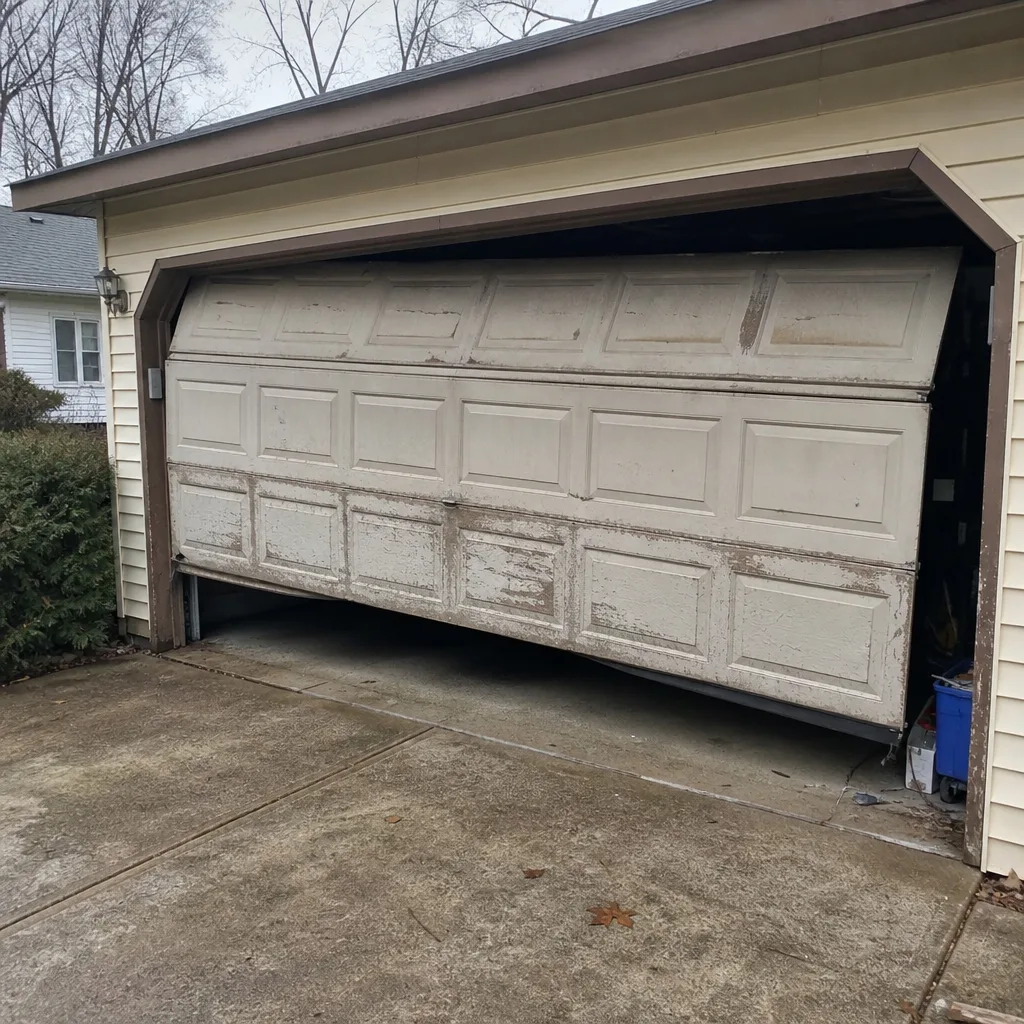 Before
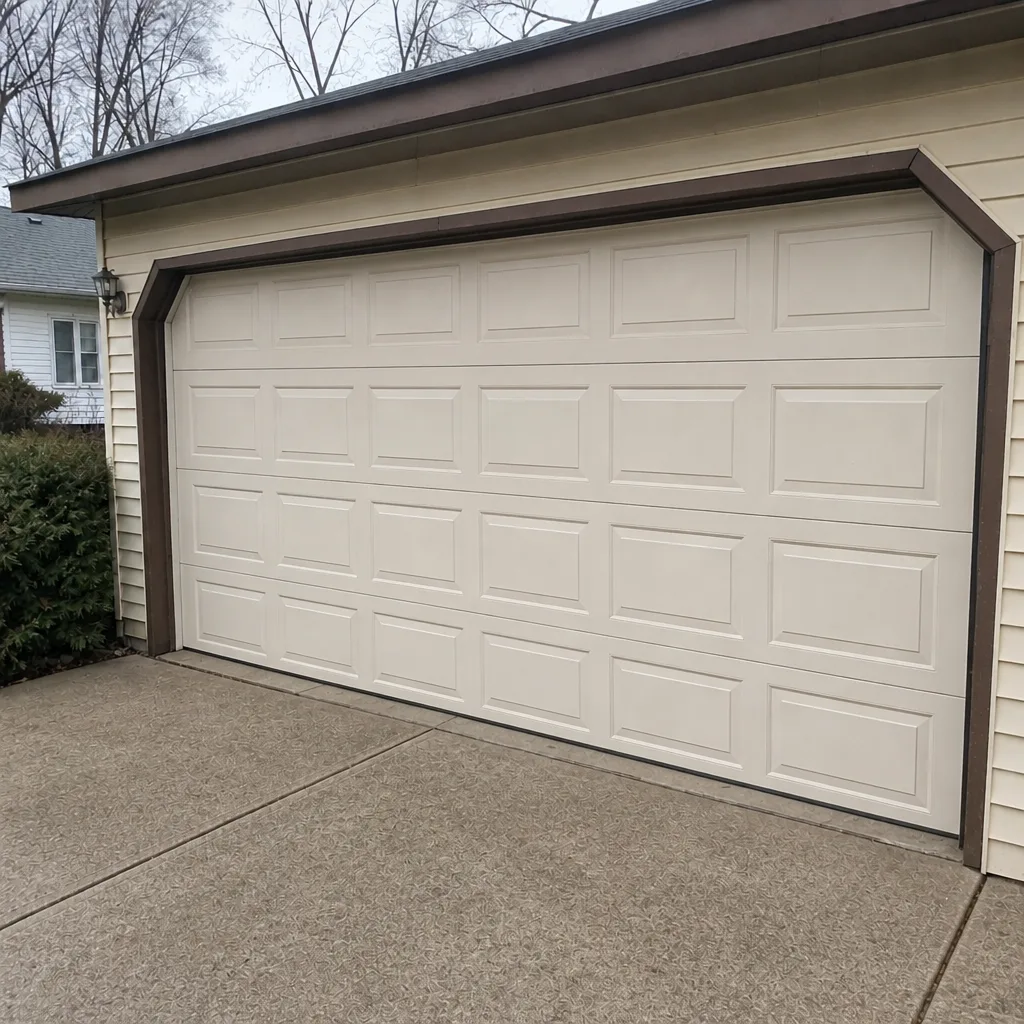 After
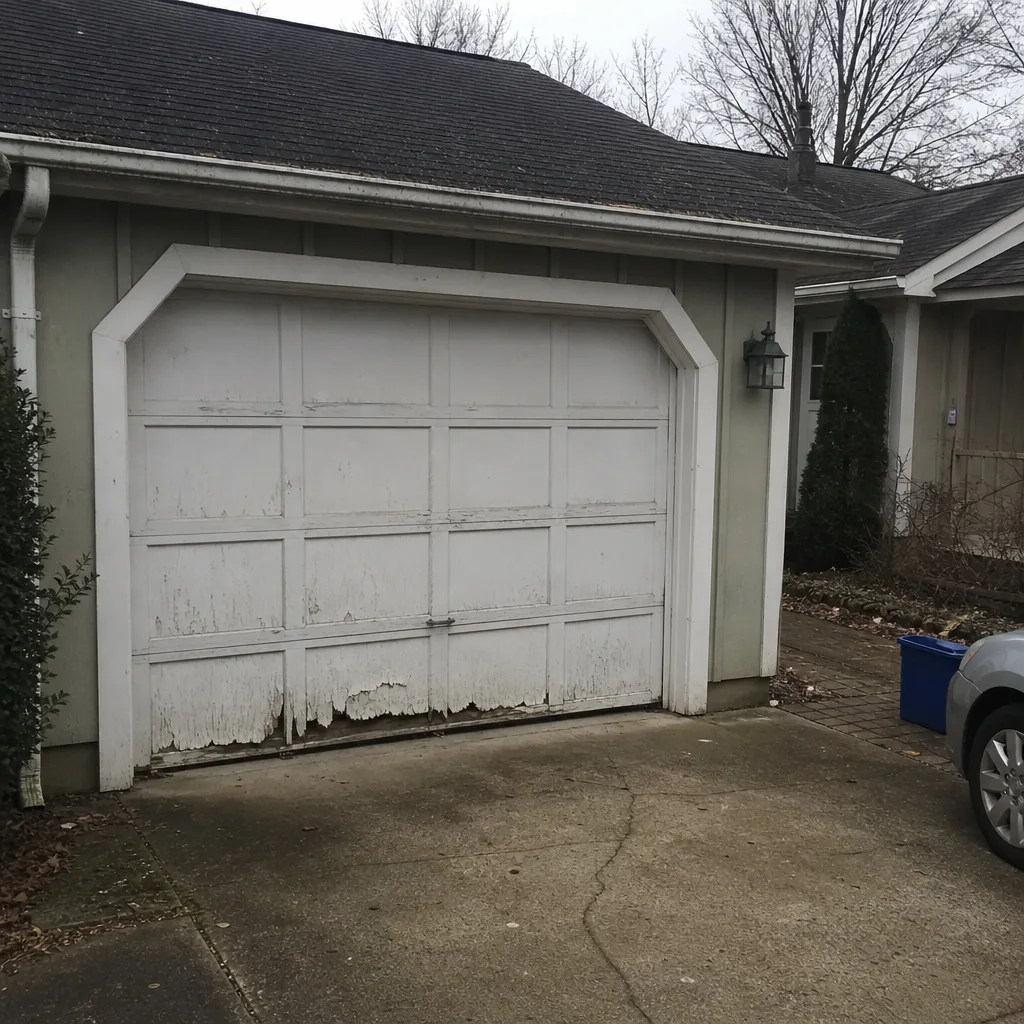 Before
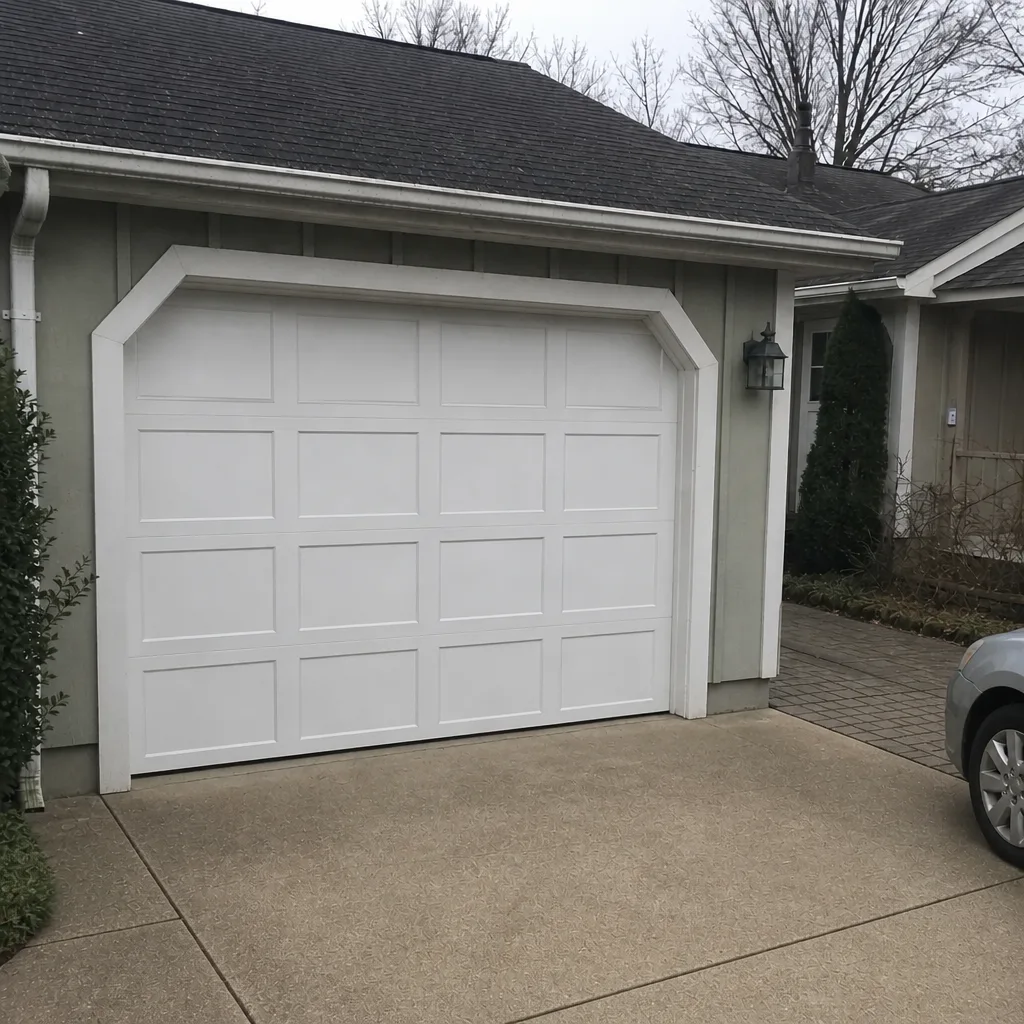 After
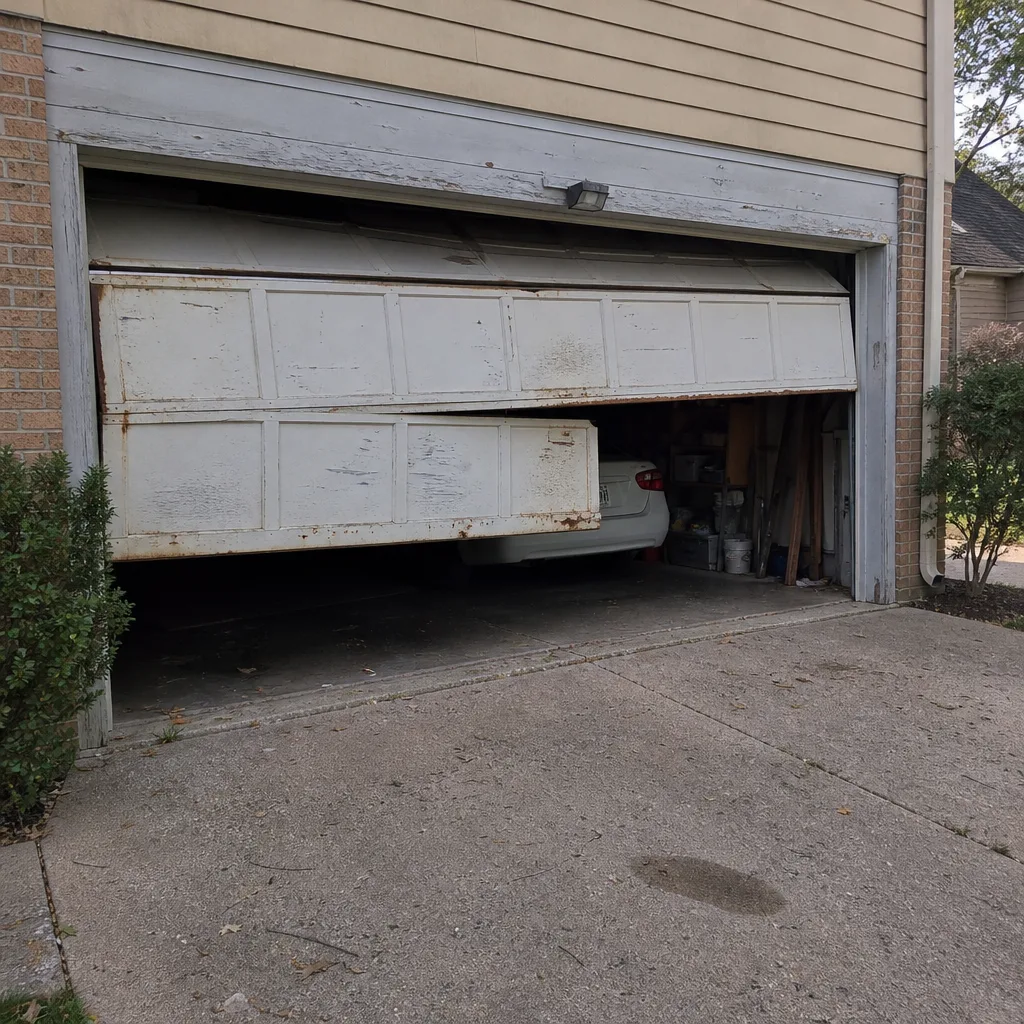 Before
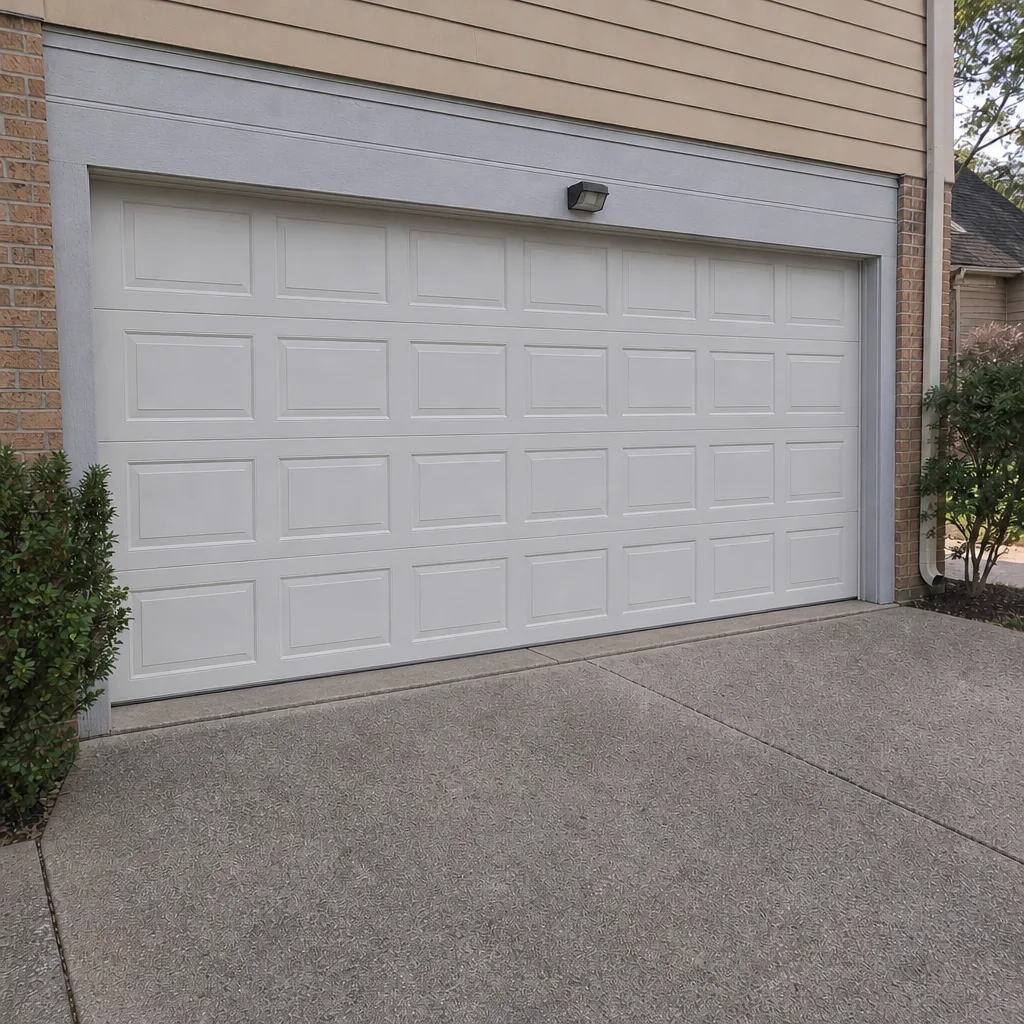 After
When to Call a Professional
Call a professional for anything involving springs, cables or a door that’s off its track – those are the failures that cause injuries and real damage when handled by hand. Call when the opener runs but the door doesn’t move, when the door reverses without reason, or when a sensor problem keeps it from closing. And call when the door is standing open and you can’t safely close it, or when your car is trapped and you need it out soon.
Reston Garage Door Repair offers free estimates in Reston – call (877) 703-6109. We answer 24/7. Fast dispatch from 7am to 7pm, Sunday through Friday, and every job is quoted and agreed before any work starts. For the full range of what we handle, start at Reston Garage Door Repair.
Frequently Asked Questions
No – don’t try. A broken spring leaves the door with no counterbalance, so the full weight is on you, and the door can drop suddenly. Keep everyone clear and call for service. Spring work requires proper winding tools and is the most dangerous garage door repair there is.
Only if the door is fully closed, the springs are intact, and the door is balanced. Never pull it if a spring is broken, a cable has snapped, the door is off its track, or the door feels heavy – disengaging an unbalanced door can send it crashing down. When in doubt, call (877) 703-6109 for advice.
We answer 24/7, with fast dispatch from 7am to 7pm, Sunday through Friday. A call outside dispatch hours is booked into the next opening. When your car is trapped or the house is open, we treat it as urgent and get a technician out as soon as we can.
No – the written estimate sets the price, and it’s agreed before any work starts. We diagnose the failure, explain what needs replacing and why, and put the price in writing. You approve it before we do anything. For an exact quote, call (877) 703-6109 – estimates are free.
Have the door brand, the opener model, the type of failure (spring, cable, off-track, or opener-only), and any photos or sounds you noticed. That detail shortens the diagnosis and helps us arrive prepared for one visit instead of two. If you don’t know the brands, that’s okay – a technician can identify them on arrival.
We work across virtually every major brand, including LiftMaster, Chamberlain, Genie, Clopay, Amarr, Wayne Dalton, Craftsman and Raynor. So whether it’s an older Craftsman opener or a newer LiftMaster with Wi-Fi, the technician knows the system. Call (877) 703-6109 and tell us what you have.
The Bottom Line
A garage door emergency is manageable if you prepare for its three phases. In the moment of failure, stop and protect the opening – don’t force a heavy door, don’t cycle a jammed opener, and don’t handle springs or cables yourself. In the hours before help arrives, secure the house and document what failed. In the repair decision, insist on a written estimate agreed before any work starts, and call one experienced team rather than a broker. Reston homeowners who do these things avoid the compounding mistakes that turn a simple failure into a safety incident. Keep the number (877) 703-6109 saved and your door details recorded, and the next emergency takes care of itself.
For help any time, call (877) 703-6109. We answer 24/7. Fast dispatch from 7am to 7pm, Sunday through Friday, with free estimates and a price agreed before we start.
Written by the team at Reston Garage Door Repair.