
Last updated November 23, 2026
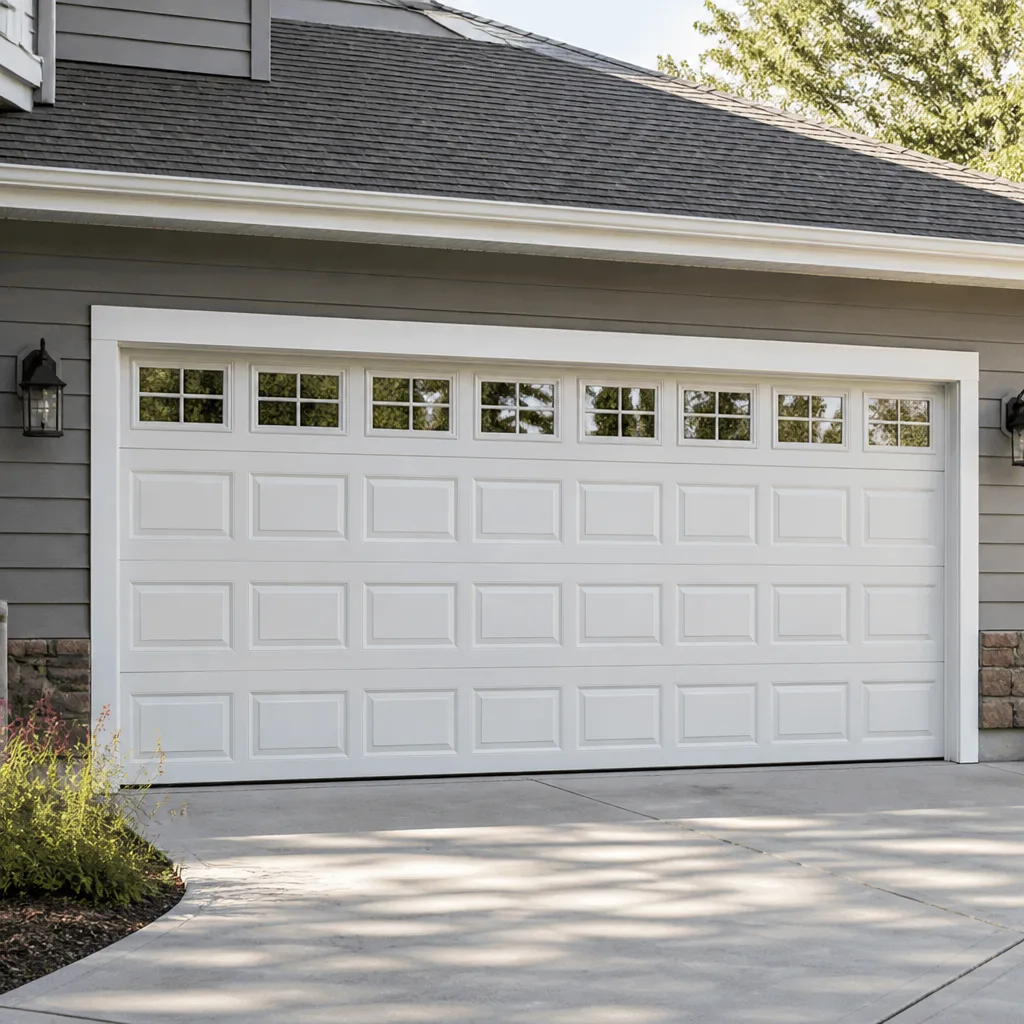 Raised-panel steel
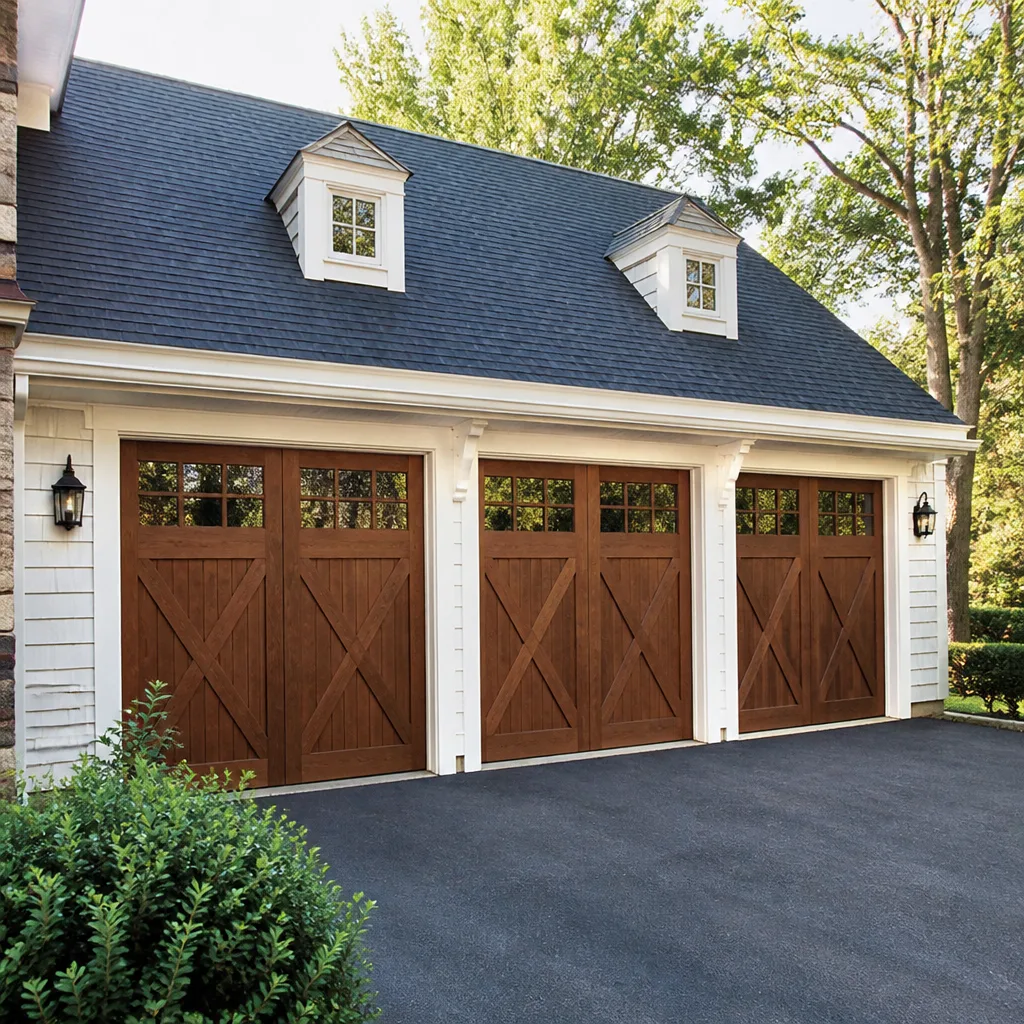 Carriage house
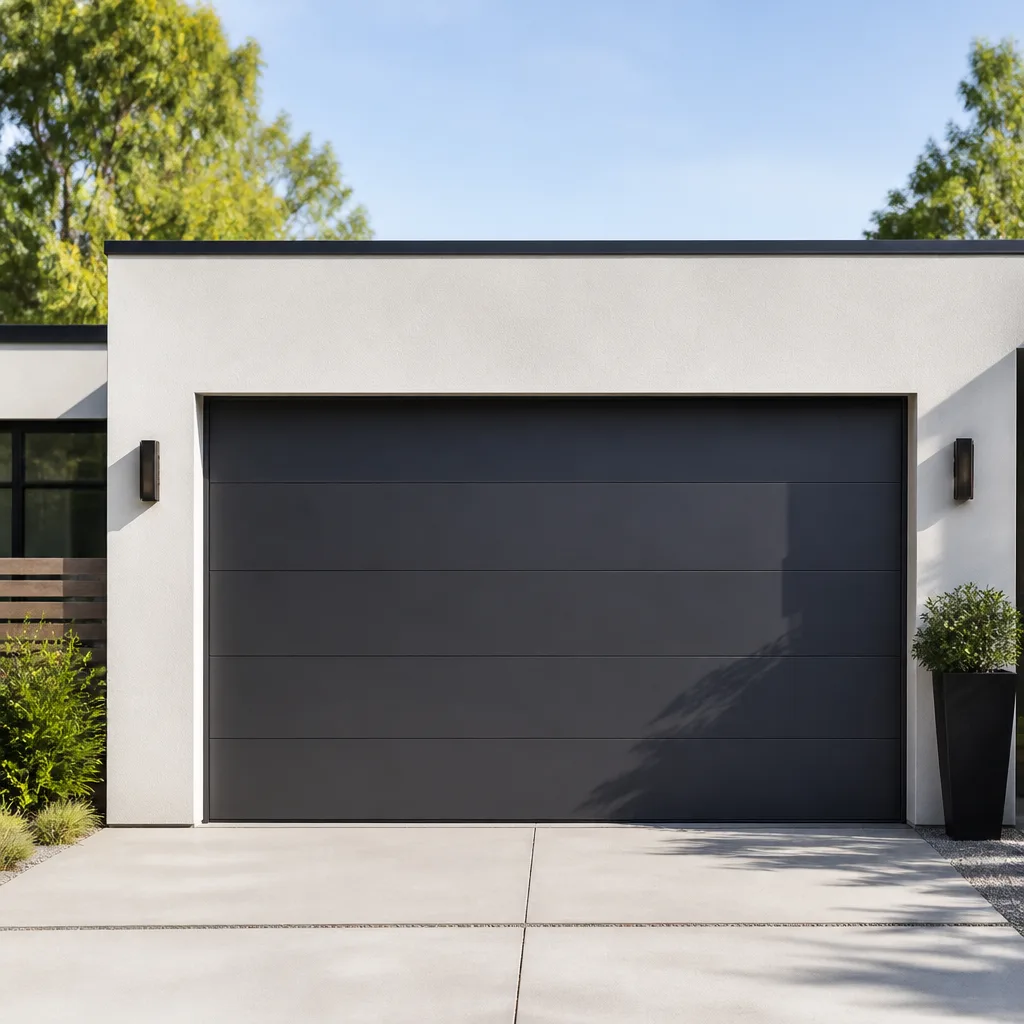 Modern flush
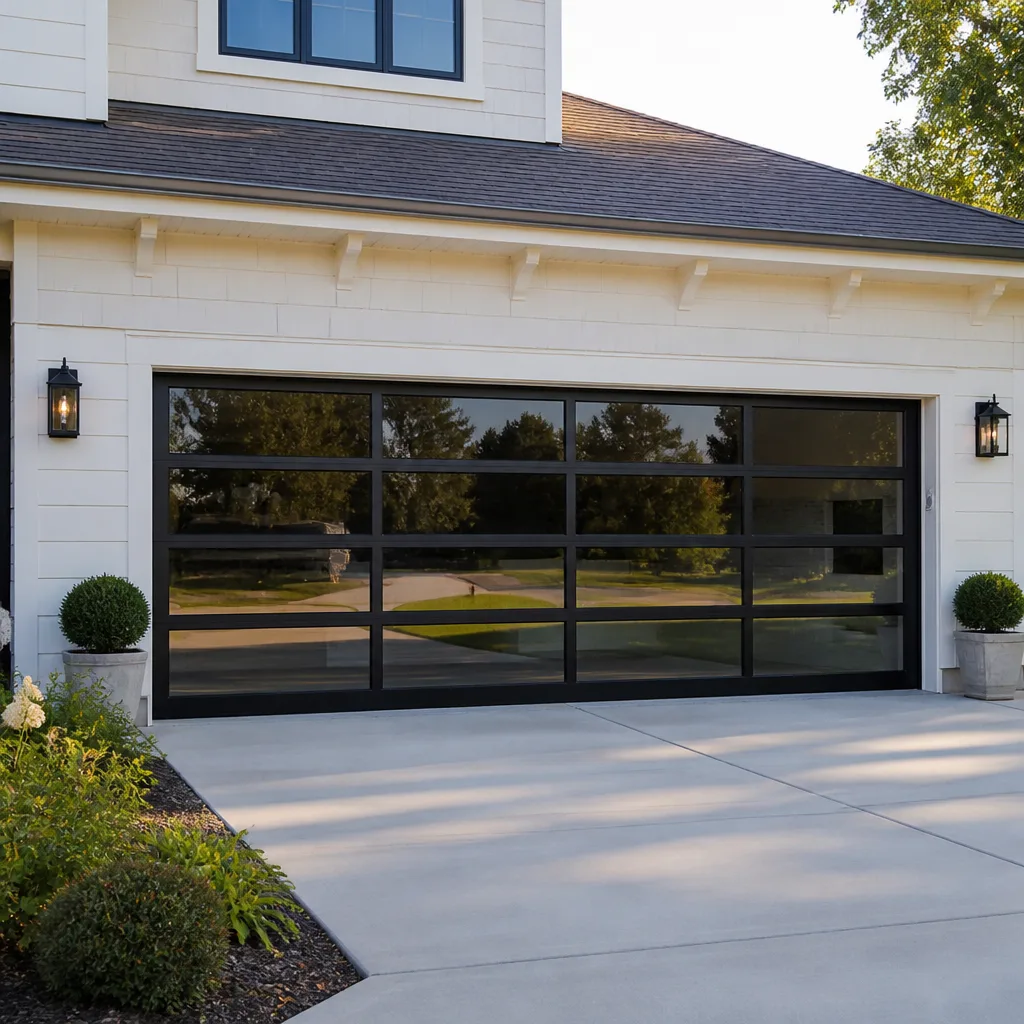 Full-view glass
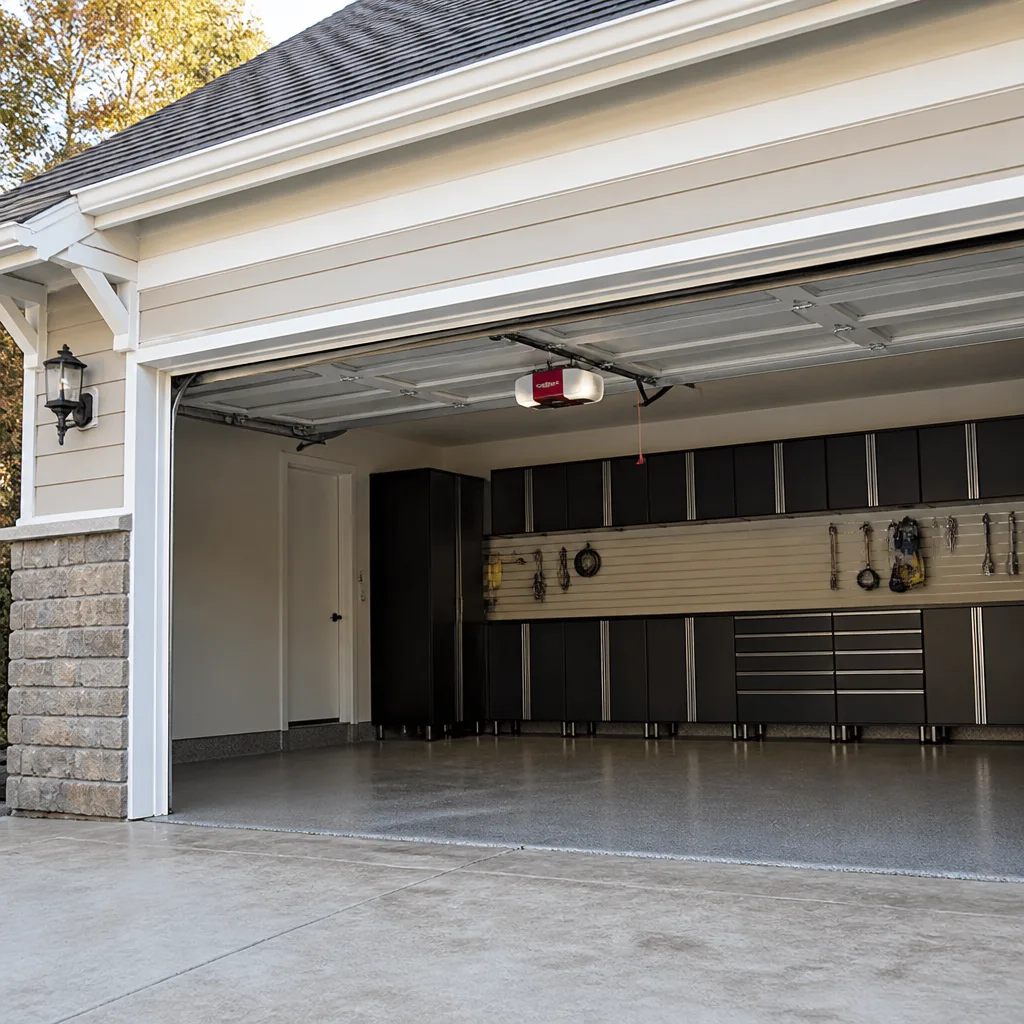 LiftMaster openers
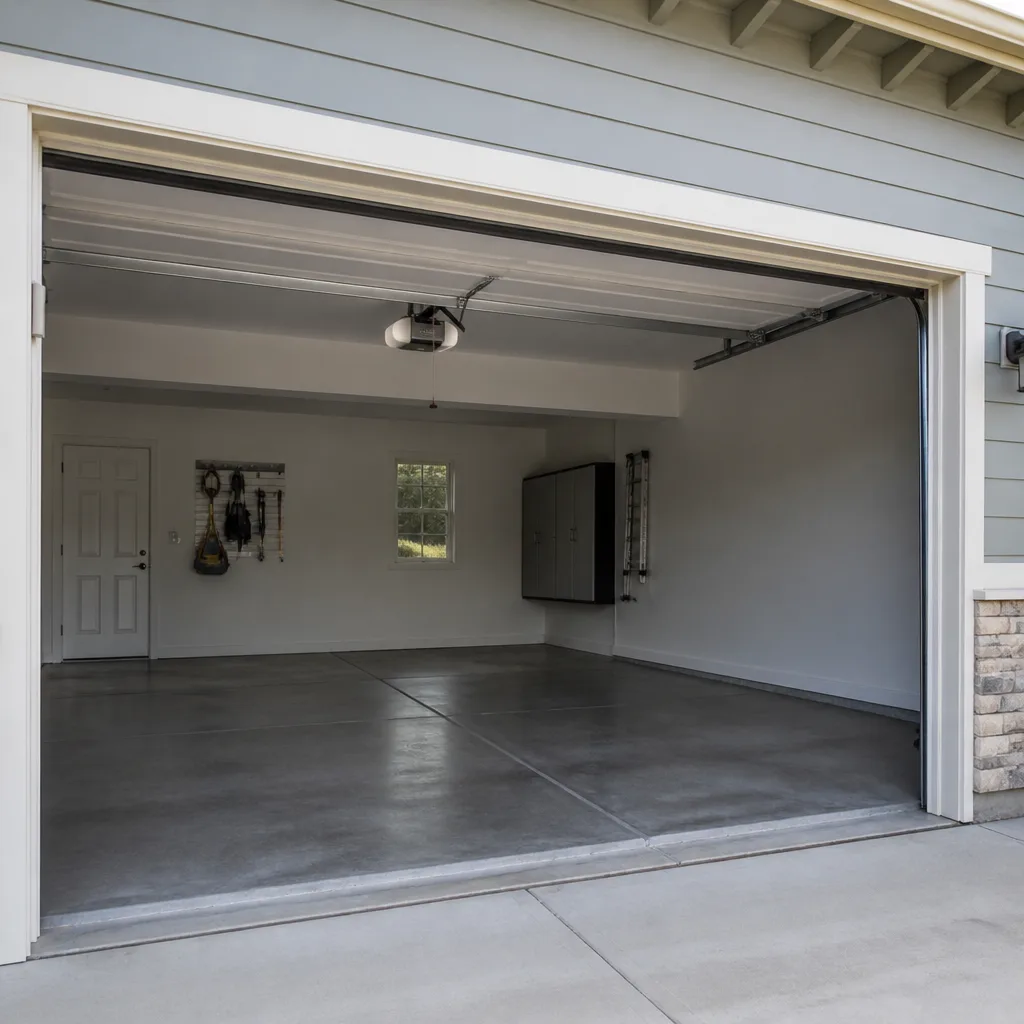 Chamberlain openers
Full 25-point door and opener safety check with every visit - springs, cables, rollers, tracks, and your LiftMaster or Chamberlain opener included
You get a price before we start. It does not change when the pro arrives.
Get your free estimateThe Complete Guide to Garage Doors in Reston
Most garage door guides are written for anywhere, USA. That’s why the advice in them about insulation values, panel styles, and permit triggers is wrong for Reston a good third of the time. A garage door here isn’t a generic purchase you drop into a generic opening. It’s a mechanical system sitting inside Fairfax County code, under Reston’s design covenants, and in a climate that freezes and thaws its way through every winter. In this guide we’ll walk through how those three forces shape what actually works in Reston, from reading an R-value label honestly to understanding why your springs wear the way they do. You’ll finish knowing how to evaluate a door, an opener, and a repair quote without guessing.
Quick Answer
A garage door in Reston has to satisfy three things at once: your HOA’s design covenants, Fairfax County’s structural and permit requirements, and a mixed-humid climate with real freeze-thaw cycling. Getting any one of those wrong is what causes premature failures, rejected installations, and callbacks. The right door is the one engineered for this climate, approved for your community, and paired with springs and an opener sized for its actual weight.
Styles & brands we work with
- Raised-panel steel
- Carriage house
- Modern flush
- Full-view glass
- LiftMaster openers
- Chamberlain openers
Table of Contents
- How Reston HOA Covenants Shape Your Door Choice
- Fairfax County Code and What It Means for Your Door
- Why Reston’s Freeze-Thaw Cycle Wears Doors Out Early
- How to Read an R-Value Label Honestly
- Your Garage Door Is a System, Not Five Purchases
- Springs: The Part That Fails Most and Matters Most
- Choosing an Opener That Fits Your Door and Your Home
- Repair or Replace? How to Decide
How Reston HOA Covenants Shape Your Door Choice
In much of Reston, the design conversation starts before you’ve looked at a single brand. Many communities here fall under Reston Association covenants, and a good number of individual clusters and subdivisions layer their own architectural rules on top. Those rules commonly constrain color, material, and window placement, which means the door you fall in love with online may be a non-starter before it’s ever ordered.
What the covenants typically govern:
- Color and finish. Many clusters restrict doors to specific palettes that coordinate with the surrounding homes. A factory color that isn’t on the approved list means either a repaint or a different door.
- Material and panel profile. Some communities specify raised-panel versus flush styles, or steel versus wood-look, to keep a consistent streetscape.
- Window placement and glazing. Where windows sit on the door and what type of glass or insert is allowed can be spelled out in the architectural guidelines.
- Hardware and trim. Decorative hinges, handles, and trim details sometimes need to match what’s already on neighboring homes.
The practical move is to pull your cluster’s architectural guidelines and get written approval before you commit to a door. That’s a step homeowners skip, and it’s the one that turns an installation into a dispute. When you’re weighing options, bring the approved parameters to your estimate. We work with Clopay, Amarr, and Wayne Dalton among others, and knowing the constraints up front lets us point you to the models that satisfy them without a special order.
What to gather before you shop
- Your cluster or association’s architectural guidelines, current version.
- Any approved color or material list specific to your section of Reston.
- Photos of neighboring doors that match the standard.
- The written approval process and who signs off.
Once you have those, choosing a door gets much simpler. The constraints do the narrowing for you.
Fairfax County Code and What It Means for Your Door
Fairfax County sets the structural side of the equation. Two things matter most for garage doors here: frost depth and wind load. They’re not abstract engineering terms – they influence how your door’s springs and tracks need to be selected, not just how the door looks.
Frost depth speaks to how deep the ground freezes in winter, which in turn affects how foundations and slab edges move through the season. A garage slab that shifts even slightly changes the geometry your door has to track against. That’s part of why doors here are more sensitive to track alignment than doors in warmer, more stable ground. Wind load, meanwhile, determines the structural resistance a door and its hardware need to meet. A door that’s undersized for the local wind requirements is a liability, and it also wears faster because it’s flexing beyond its design.
On permits: most municipalities require a permit for structural door replacement or for changes to the opening and framing, though the rules vary by scope. We won’t guess at the specifics for your address. Ask Fairfax County’s building department directly what your project triggers, and factor that into your timeline. A door replacement that needs a permit isn’t a same-day job, and any installer who tells you otherwise is worth questioning.
What this means for you in practice:
- Choose springs and tracks rated for the door’s actual weight and the local wind requirements, not just “whatever fits.”
- Expect track alignment to matter more in Reston than in a climate with stable ground year-round.
- Confirm permit scope before ordering a new door so the schedule doesn’t surprise you.
Why Reston’s Freeze-Thaw Cycle Wears Doors Out Early
Reston sits in a mixed-humid climate, and the defining feature of that climate for a garage door is the freeze-thaw cycle. Water gets into a seam, a hinge, or a weather seal, freezes overnight, expands, and then thaws. Repeat that across a winter and you get the wear patterns we see all the time in this area: weatherstripping that hardens and cracks, hinges that stiffen, bottom seals that no longer sit flat, and paint that lifts at the edges.
This is also where the big-box store gets people into trouble. A door sold as a generic model may be built for a dry climate, where the main enemy is sun and dust rather than moisture cycling through freeze and thaw. A door rated for Virginia’s mixed-humid conditions is built differently: the seals, the steel coating, and the bottom weatherstripping are chosen to survive wet-and-cold cycles rather than dry heat. Buying the wrong one shaves years off its service life, and you won’t notice until the seals are failing and the door is tracking poorly two winters in.
What the cycle attacks, in order of how often we see it:
- Bottom weather seals – the first to harden and lose their seal against the slab.
- Hinges and rollers – moisture works into the joints and they stiffen.
- Track alignment – slab and frame movement pulls the door slightly out of true.
- Springs – constant cycling through a wide temperature range accelerates fatigue.
- Paint and finish at panel edges – where water sits and freezes.
None of this means a Reston garage is doomed. It means the door and its consumable parts need to be chosen for this climate and checked on a schedule rather than ignored until something breaks.
How to Read an R-Value Label Honestly
R-value measures resistance to heat flow. Higher is better, but the number on the box tells you less than the marketers want you to believe, because the same door performs very differently depending on what it’s attached to. A 12.9 R-value door in an attached Reston garage does a different job than that exact door in a detached structure.
Here’s the honest way to read it. In an attached garage, the door shares walls and often a ceiling with living space. Insulation on the door slows heat transfer between the garage and the house, which matters if the garage sits under or beside conditioned rooms. But the door is only one surface of that envelope. If the garage walls and ceiling aren’t insulated to match, a high-R door is doing more work than the rest of the structure supports, and you won’t feel the full benefit. In a detached garage, the door is far more exposed to outdoor air on all sides, and a higher R-value earns its keep more directly.
What the R-value label doesn’t tell you:
- Whether the insulation is continuous or interrupted by thermal bridges at the frame and hinges.
- How well the door seals at the perimeter, which affects real-world performance as much as the panel’s rating.
- Whether the door is rated for your climate at all – a dry-climate door can carry a respectable R-value and still fail early here.
Our advice: match the R-value to the structure, not to the biggest number on the label. An attached Reston garage with a well-insulated surrounding envelope benefits from a solid mid-range door. A detached garage or one over a cold space justifies going higher. And pair either with good perimeter sealing, or the R-value is largely theoretical.
Your Garage Door Is a System, Not Five Purchases
The single most useful mental shift in this whole guide: the door, the opener, the springs, the tracks, and the weatherstripping are one system. They’re sized to each other, and changing one without accounting for the others is how garages end up failing in ways that look mysterious. A heavier door overworks an opener sized for a lighter one. A stiffer spring changes how the opener has to work. A track that’s out of alignment drags on everything downstream.
The dependencies, plainly:
- Door weight sets what the springs must lift and what the opener must move.
- Springs counterbalance the door so the opener only has to nudge it, not haul it.
- Tracks keep the door moving in a straight line so the springs and opener aren’t fighting misalignment.
- Weatherstripping seals the perimeter so the door isn’t working against drafts and moisture.
- Opener is sized to the door and spring combination, not chosen in isolation.
When one component is replaced without regard to the rest, the others take the strain. That’s why a garage door repair that only swaps the visibly broken part sometimes leads to a second failure shortly after. A system-level diagnosis looks at all five and asks whether the failing part is the cause or the symptom. This is where a technician familiar with your specific brand earns their keep: a Genie opener paired with a Wayne Dalton door and springs sized for a different weight behaves in ways that are obvious to someone who knows the system and baffling to someone who doesn’t.
Springs: The Part That Fails Most and Matters Most
Springs are the highest-risk, most technically demanding part of a garage door, and in Reston’s freeze-thaw climate they take a beating. They’re also the part we’re most careful about, because a garage door spring stores an enormous amount of energy. When one fails it releases that energy suddenly and without warning. This is not a part to work on yourself, and we mean that plainly: a spring under tension can cause serious injury, and the tools and technique to handle it safely are specialized. If your spring has broken, stop using the door and call a professional.
What a spring failure looks like, and why it happens:
- A loud bang from the garage, often followed by a door that won’t lift or that lifts unevenly.
- Visible gaps in the spring coil when you look from a safe distance.
- A door that feels extremely heavy when you try to lift it by hand, which means the spring is no longer counterbalancing it.
Springs don’t fail from a single cause. Constant daily cycling, the wide temperature swings of a Reston winter, and a door that’s slightly heavier than the spring was sized for all stack up. Our garage door spring repair service exists because this repair is too common and too dangerous to leave to guesswork. Springs are rated in cycles – the number of open-and-close movements they’re built to survive – and replacing them is done as a matched pair, because one spring replaced alone will fail soon after its partner. If a quote is for a single spring on a two-spring door, ask why.
Why we handle springs the way we do
We use the proper winding tools, we match the spring to the actual door weight, and we set the door to balance correctly before handing it back. A door that’s out of balance after a spring repair will wear through its new springs faster and put extra load on the opener. Doing it right the first time is the whole point.
Choosing an Opener That Fits Your Door and Your Home
An opener is not a generic appliance. It’s sized to the door it moves, and it has to fit how you actually use your garage. If your garage is your primary entry point, the opener gets a workout – dozens of cycles a day in some households. That changes what you should buy.
The starting points that matter:
- Match the opener to the door. Door weight and spring condition determine the horsepower you need. An oversized opener on a poorly balanced door is a band-aid, not a solution.
- Decide how smart you want it. If you’re integrating with home automation, a Wi-Fi-enabled system is worth the investment. If not, a simpler opener is easier to live with and cheaper to repair.
- Consider the noise. An opener under a room you sleep in benefits from a belt drive over a chain drive.
- Check the safety features. The auto-reverse and safety-beam functions are non-negotiable and should be tested as part of any repair or installation.
On brand familiarity: whether it’s a newer LiftMaster with Wi-Fi or a ten-year-old Craftsman that’s been running the door since the house was built, we know the system. We work with Genie, Chamberlain, LiftMaster, and the legacy Craftsman line, along with the door brands – Clopay, Amarr, Wayne Dalton, and Raynor. That matters because openers fail in brand-specific ways, and a tech who’s seen your model’s quirks diagnoses faster than one starting from scratch. When you need garage door opener repair, the goal is a fix that holds, not a workaround that fails in a month.
Smart-home integration, briefly
If you’re connecting the opener to a smart-home system, the two dominant ecosystems are the LiftMaster and Chamberlain/myQ family. Those integrate most readily. Older Craftsmans and Genies are dependable workhorses but may not talk to modern automation without additional hardware. Know which category you’re in before you buy.
Repair or Replace? How to Decide
The question homeowners actually want answered: when is it worth fixing the door you have, and when is it time for a new one? There’s no single number because it depends on the door’s condition and the cost of the repair relative to replacement. But there are clear signals in each direction.
Lean toward repair when:
- The door panels are sound and the failure is in a replaceable component – springs, rollers, hinges, opener, weatherstripping.
- One spring is broken and the door is otherwise in good shape.
- The opener is failing but the door and its hardware are healthy.
- You want the same door, fixed right, without the disruption of a full replacement.
Lean toward replacement when:
- Panels are dented, rusted, or separating at the edges, particularly after years of freeze-thaw wear.
- The door is undersized for Fairfax County’s wind requirements or wasn’t built for this climate in the first place.
- You’re facing stacked repairs – springs, opener, and tracks all failing around the same time.
- Your HOA is requiring a change, or you’re remodeling and want the door to match.
Either way, this is where a professional assessment saves money. A technician who works on the full system can tell you whether the failing part is the cause or a symptom, and whether one repair will hold or just delay a bigger job. Our garage door repair covers the fix-it path, and when replacement is the right call, we handle that too.
Common Mistakes to Avoid
- Ordering a door before checking HOA covenants. Many Reston clusters restrict color, material, and window placement. The door you love online may not be approved for your street. Pull the guidelines first.
- Buying a dry-climate door at a big-box store. A door built for dry heat won’t survive the freeze-thaw cycling here. Confirm it’s rated for a mixed-humid climate before you buy.
- Treating R-value as a single number. A 12.9 R-value door in an attached garage with uninsulated walls won’t perform like the label implies. Match the rating to the structure around it.
- DIY spring replacement. Springs store dangerous amounts of energy. This is the one repair that genuinely must go to a trained professional with the right tools.
- Replacing one spring when both are worn. Matched pairs wear together. A single replacement will be back on your list soon, and the door will run unevenly in the meantime.
- Choosing an opener in isolation. An opener sized for the wrong door, or a heavier door dropped onto an existing opener, overworks the whole system. Size them together.
- Ignoring the weatherstripping. The bottom seal is the first thing to fail in this climate. Replacing it is inexpensive compared with the damage a failed seal lets in.
See the difference
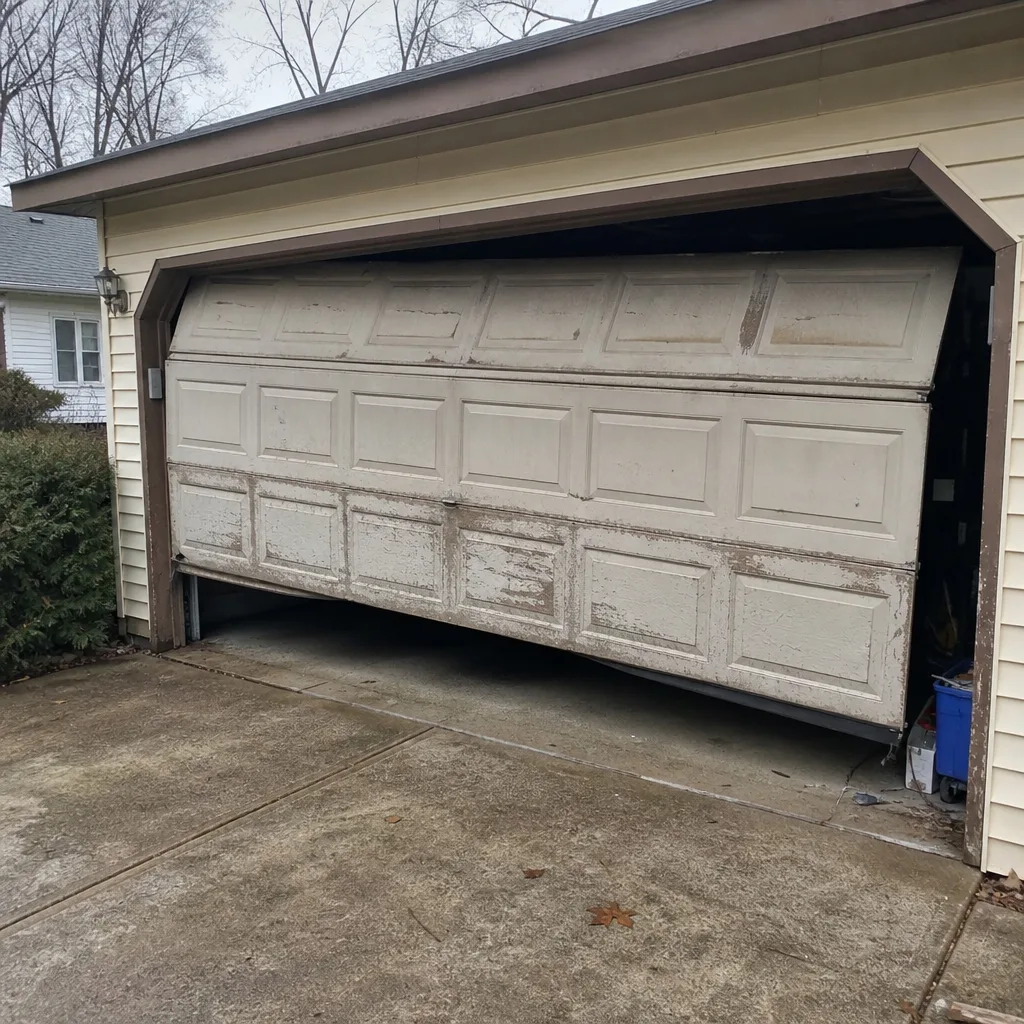 Before
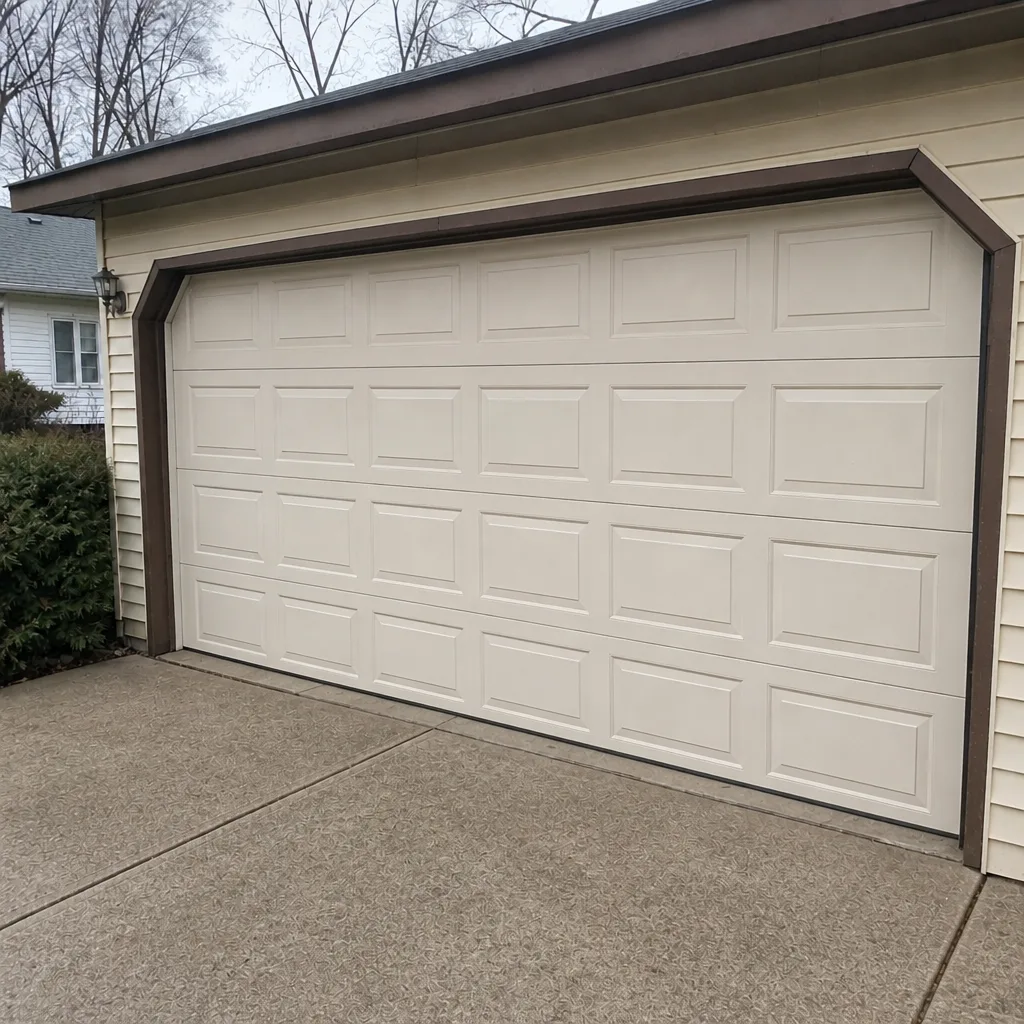 After
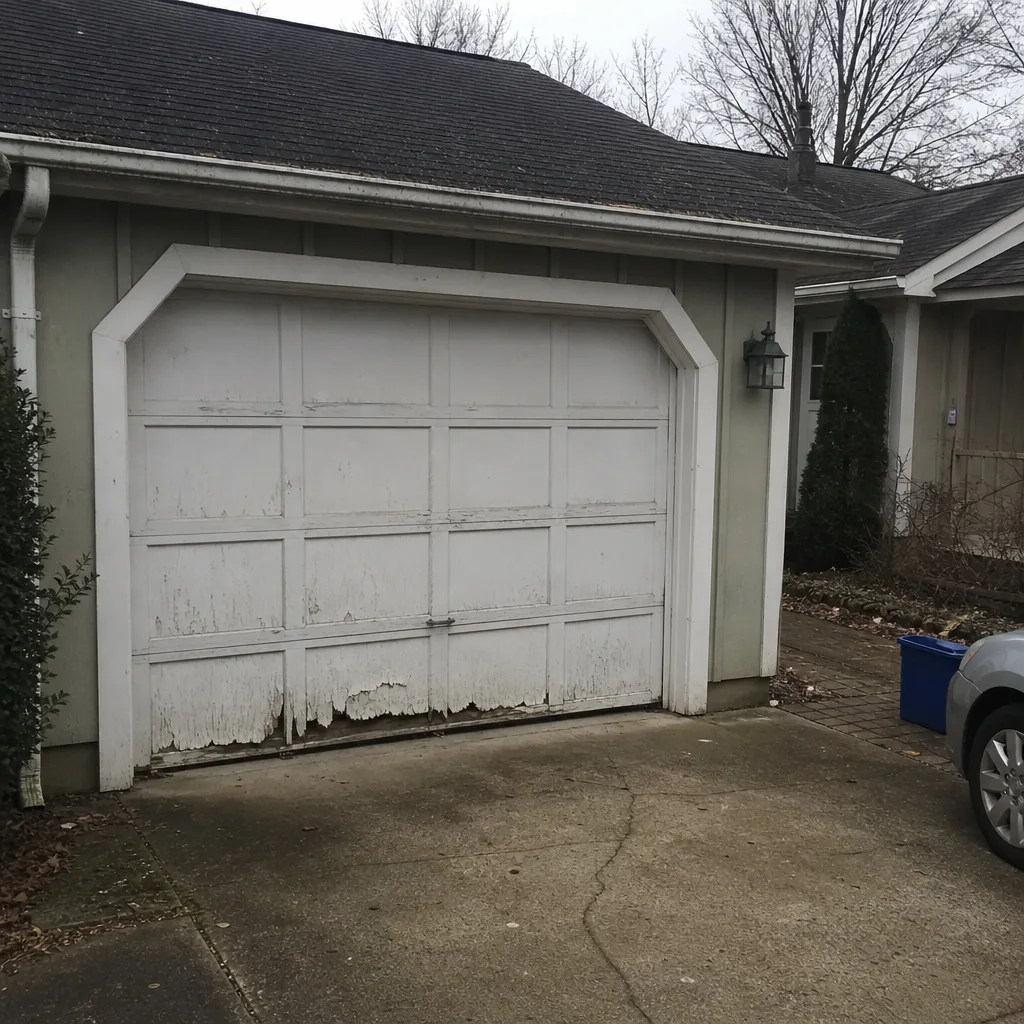 Before
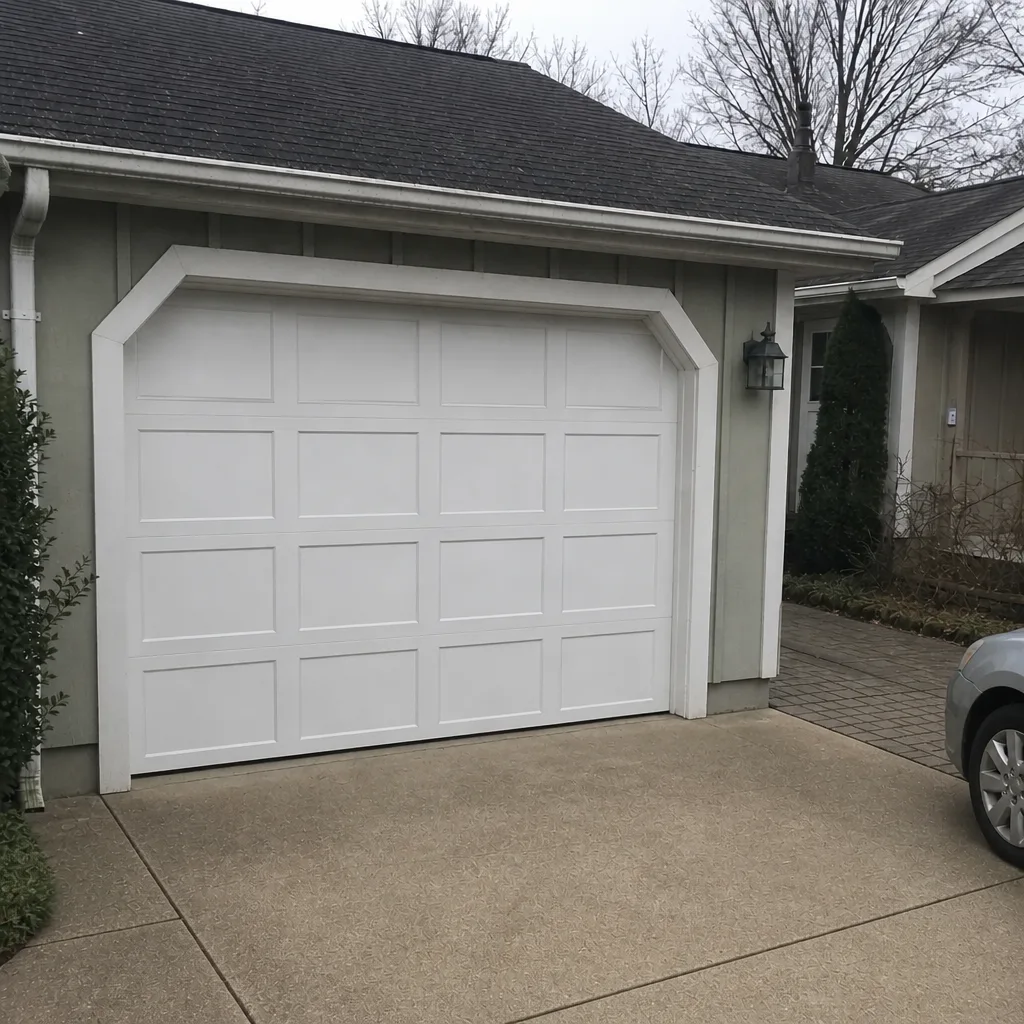 After
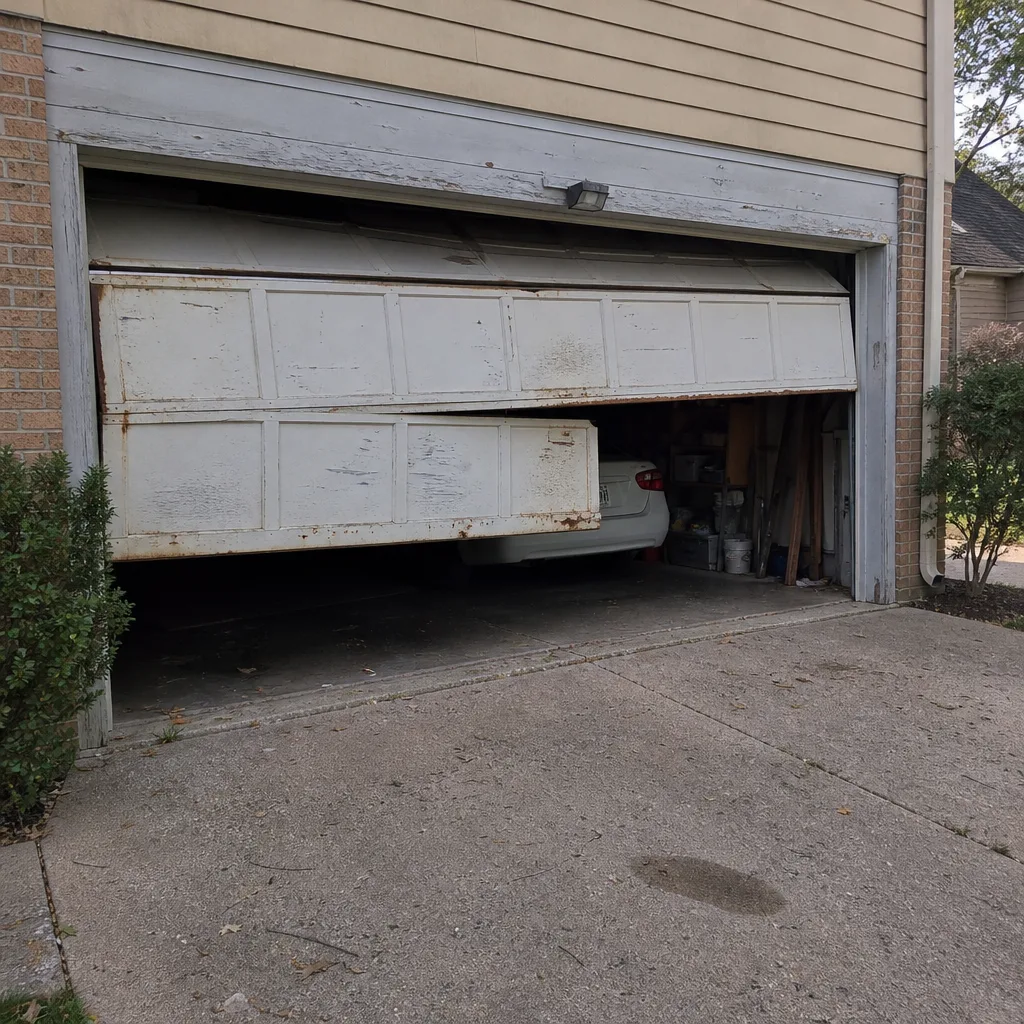 Before
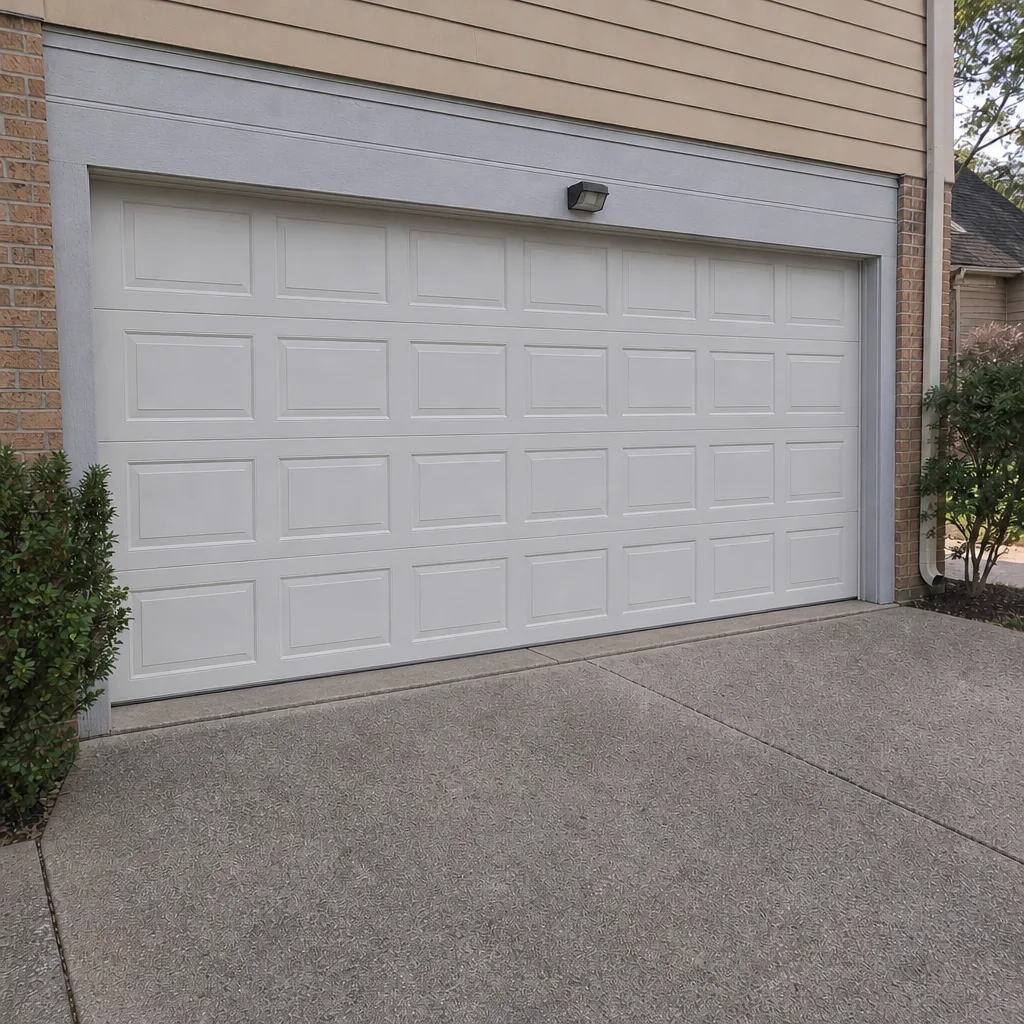 After
When to Call a Professional
Some of this you can handle: checking the weatherstripping, listening for unusual noise, testing the safety reverse, and calling a professional when a spring breaks. What you shouldn’t tackle yourself is anything involving springs, opener internals, or track realignment after a failure. Those carry real injury risk and, done wrong, cause damage that costs more than the original call. Call a professional when a spring snaps, when the door won’t close evenly or reverses without cause, when the opener runs but the door doesn’t move, when the door has come off its track, or when panels are separating. In Reston, Reston Garage Door Repair offers free estimates in Reston – call (877) 703-6109. We answer 24/7. Fast dispatch from 7am to 7pm, Sunday through Friday, and we’re closed Saturday. The written estimate sets the price, and it’s quoted and agreed before any work starts.
Frequently Asked Questions
In many Reston communities, yes. A large number of clusters and subdivisions fall under Reston Association covenants and their own architectural rules, which commonly govern door color, material, and window placement. Check your cluster’s guidelines and get written approval before you order a door, not after.
No, and we’d strongly advise against it. Garage door springs store enormous energy and can cause serious injury if they release unexpectedly. The repair requires specialized winding tools and a door balancing procedure. This is a job for a trained professional.
The door must be rated for a mixed-humid climate, not a dry one. Doors built for dry climates use different seals and coatings and wear out early through freeze-thaw cycles. Confirm the rating before buying, and pair the door with good perimeter sealing, which matters as much as the panel itself.
Match the R-value to the structure. An attached garage with a well-insulated surrounding envelope does fine with a solid mid-range door. A detached garage or one over a cold space justifies a higher R-value. A high-R door surrounded by uninsulated walls won’t perform like the label implies.
For repair calls, often yes. Same-day service is available for many repairs, and emergency service handles situations that can’t wait – a door that traps your car or leaves your home unsecured. Call (877) 703-6109. We answer 24/7. Fast dispatch from 7am to 7pm, Sunday through Friday, closed Saturday. Replacement work is measured, ordered, and scheduled instead.
No. The written estimate sets the price, and it’s quoted and agreed before any work starts. We diagnose first, present the price, and only begin once you’ve approved it. You won’t get a surprise invoice.
The Bottom Line
A garage door in Reston is a system in a specific place. Get your HOA covenants straight before you shop. Pick a door rated for the mixed-humid climate and paired with springs and an opener sized to its weight. Read the R-value against the structure around it, not the label alone. And respect the springs – they’re the part most likely to fail and the part most dangerous to handle yourself. Handle the weatherstripping and track alignment on a schedule and you’ll get far more life out of the door. When something breaks, the right fix addresses the whole system, not just the part that made the noise.
When you’re ready for an honest diagnosis or a free estimate, Reston Garage Door Repair works on your brand, whether it’s a Genie opener, a Clopay door, or a Wayne Dalton system that’s been on the house since it was built. Call (877) 703-6109 for a free estimate. We answer 24/7. Fast dispatch from 7am to 7pm, Sunday through Friday, and we’re closed Saturday. The price is quoted and agreed before any work starts. If you’re starting from the beginning, visit Reston Garage Door Repair to see how we handle both repair and full installation.
Written by the team at Reston Garage Door Repair.